Short answer
After authorities release the home, a suicide cleanup provider talks with you or a designated helper, assesses the affected area, and writes a scope. The crew asks which personal items to save, contains the space, removes and disinfects affected materials, handles regulated waste and verifies the result. You do not need to be present, and you should receive clear records and a respectful, discreet team.
Before a cleanup company is called
After a death by suicide at home, police and the medical examiner or coroner usually respond. They document the scene, speak with family members and arrange for the person to be transported with care. Only after they release the home can cleanup begin. In many cases this happens within a day, but it can take longer depending on the circumstances and the local agency.
Once the home is released, you are not obligated to act immediately. If the situation allows, you can take a few hours to breathe, call someone you trust and decide who will make arrangements. If the home is occupied by children or others who need to use it, that may make cleanup more urgent, and that is fine too.
Some families learn about cleanup providers from the police, the medical examiner's office, a funeral home or a victim advocate. You are free to choose any qualified provider, and you can call more than one. Local practices differ, so if you are unsure of the next step, the responding agency can usually tell you how things work in your area.
Do I have to be the one who talks to the cleanup company?
No. Many people find that they cannot face those conversations in the first days, and that is completely understandable. You can ask a family member, friend, clergy member or property manager to act as the point of contact, as long as the person responsible for the property agrees.
A caring provider will ask practical questions without prying: where the home is, which room was affected, what the flooring and furniture are made of, when the home was released and whether anyone lives there. They should never ask for graphic details. If a question feels too hard, you can say so, and they can gather that information during the on-site assessment instead.
They should also explain how they price work, when they can come and what records they will give you. Take notes, or ask your helper to.
What the assessment involves
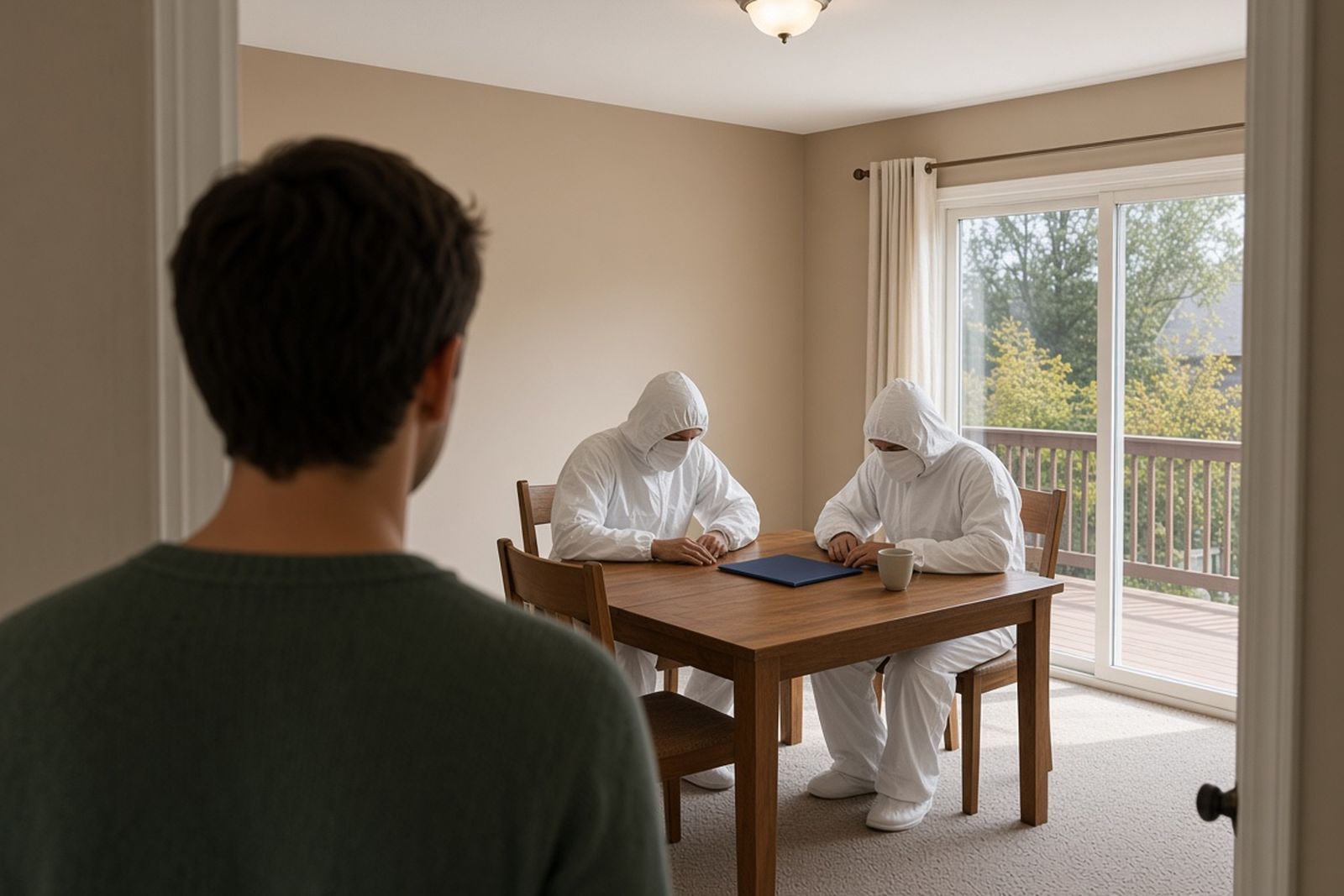
A supervisor or lead technician visits the home and looks at the affected area while wearing protective equipment. They check whether fluids reached materials beneath the surface, such as carpet pad, subfloor or the lower part of drywall, and they identify items that may be salvageable. They may take photos for the written scope and for insurance.
You do not need to be present in the room, or even in the house. Some families prefer to wait elsewhere and receive a phone call afterward. Others want to be nearby. Either is fine.
After the assessment, you should receive a written scope that describes what will be cleaned in place, what will be removed, how personal items will be handled, how waste will be packaged and what is not included. Take your time reading it, or ask someone you trust to review it with you.
Can I keep my loved one's personal things?
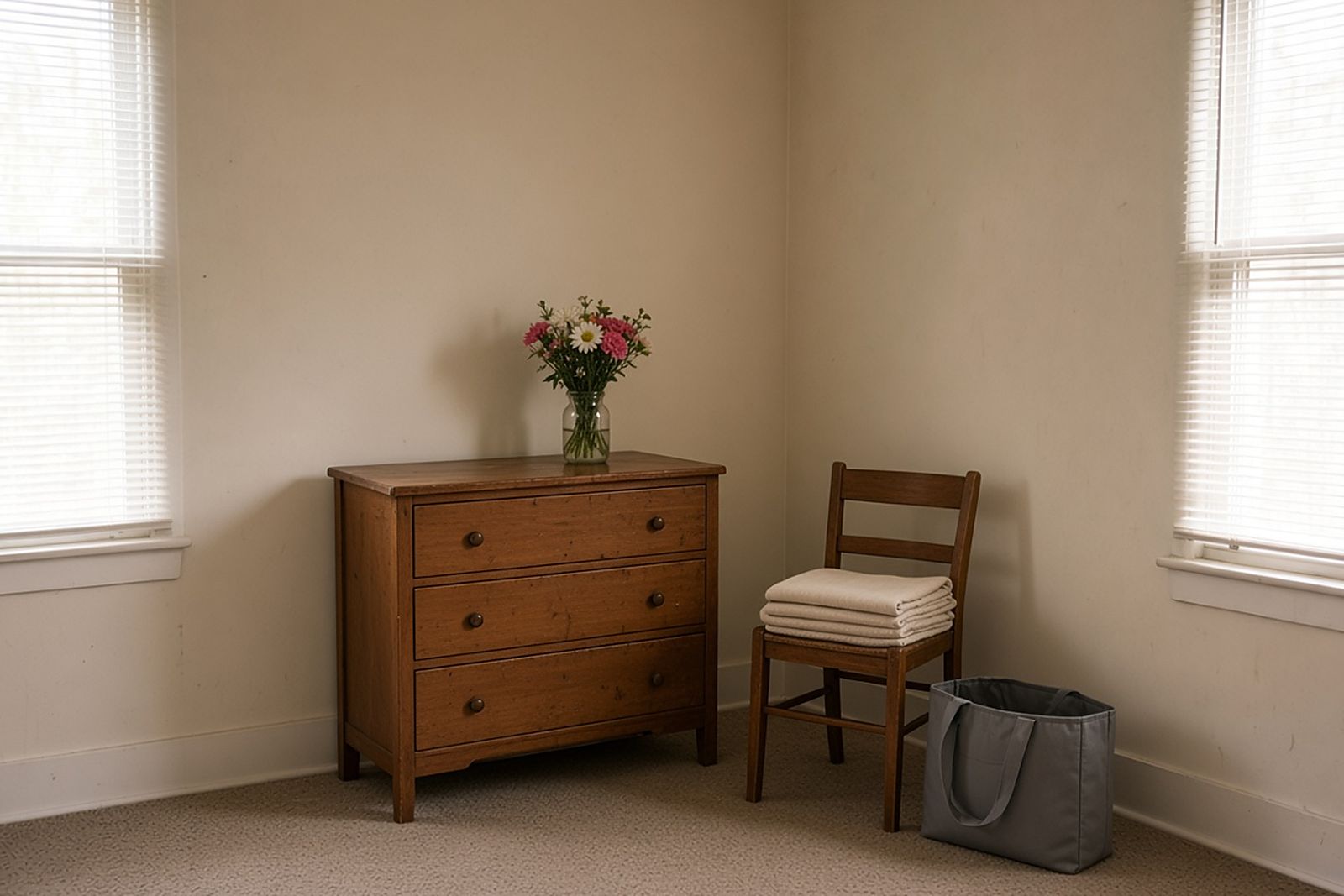
In many cases, yes. Before work begins, a thoughtful provider will ask what matters to you. Families often ask for a phone, wallet, glasses, jewelry, a journal, photographs, letters, a favorite shirt or items that carry faith or cultural meaning. You may not know yet what you will want later, so it is reasonable to ask the crew to set aside anything personal they find for you to decide about.
Items from the affected area are assessed with care. Many hard items can be cleaned and returned. Some fabrics and papers can be restored, and some cannot. If an item cannot be safely returned, the provider should ask before discarding it. They can photograph it for you if you wish.
Some families find a note or letter during this time. If the crew finds one, they should hand it to the family or authorities as appropriate, unread and handled respectfully.
- Share a list of items you know you want, even if you are unsure where they are
- Ask the crew to set aside any personal papers, photos or keepsakes
- Request an inventory of items saved and removed
- Decide who will receive saved items and when
What the crew actually does
The team begins by protecting the rest of the home. They may cover the floor along their path, close off the doorway with plastic sheeting and turn off vents so nothing travels to other rooms. They use protective suits, gloves, eye protection and respirators, and they set up a place to put on and remove that gear.
Next, they remove affected porous materials, such as carpet and pad, a mattress or upholstered furniture, and check beneath them for spread. Hard surfaces are cleaned and disinfected using products and contact times appropriate for bloodborne pathogens. If the crew finds that the affected area is larger than expected, they should pause and explain before expanding the work.
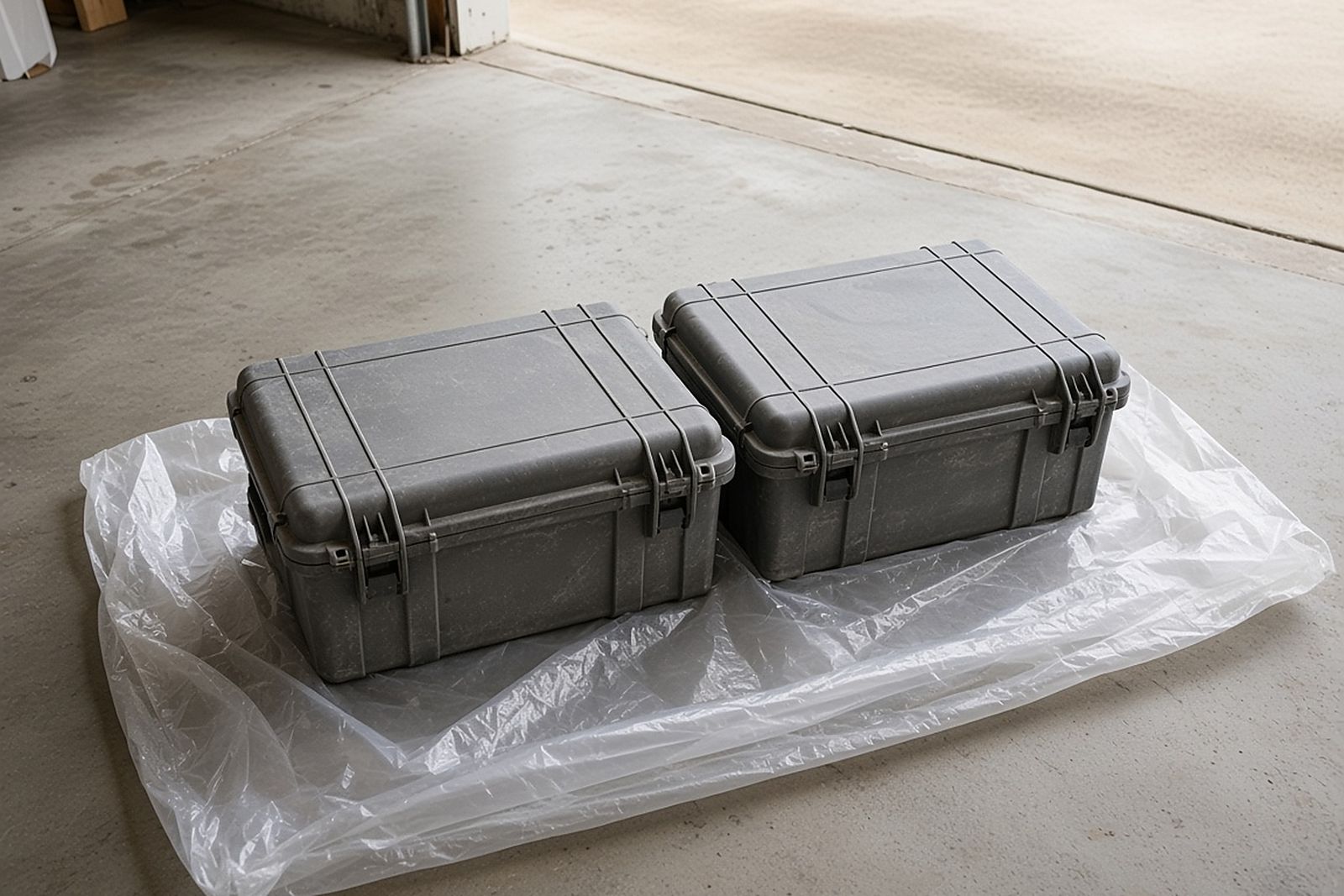
Removed materials are packed into containers suitable for regulated waste and transported for proper disposal. The provider should give you a record showing where that waste went.
The steps in one family's home
To make the steps concrete, here is a fictional family. A husband finds that his wife has died by suicide in the upstairs bathroom of their home. After the medical examiner leaves, his adult son takes over calls so his father can rest.
The son explains to the provider that the bathroom has tile flooring and a small rug, and that his parents' bedroom is next door. The supervisor visits the next morning. She finds that the tile, tub and vanity can be cleaned in place, while the rug, towels and a bathmat must be removed. A small area of grout needs extra attention. The mother's reading glasses, a ring and a hairbrush are set aside for the family.
The crew completes the work in one afternoon, ventilates the room and leaves it looking clean and ordinary. The son receives photos, an inventory and a waste record. The saved items are returned in a small sealed box, which the father keeps unopened for a few weeks until he feels ready.
The example shows only the general flow; every family's experience is different.
Privacy, verification and going back in
A respectful provider works hard to keep your loss private. Many arrive in unmarked vehicles, wear plain clothing on arrival and carry equipment inside before putting on protective gear. If neighbors ask, crews typically say only that they are doing a cleaning or restoration project.
If you have particular wishes, such as work happening while you are away, or finishing before a relative arrives, share them. A good company will plan around your needs.
If you live in an apartment or condominium, the building manager may need to know that work is happening so the crew can use a service elevator or loading area. You can decide how much to share. Saying that a family emergency requires a professional cleaning is enough for most managers, and the provider can coordinate access details directly so you do not have to.
At the end, the crew should inspect the space, confirm that affected materials were removed or disinfected and check that nothing was missed. Some providers use surface testing to support their verification. You should receive a summary with photos, an inventory and disposal records, and a note on any repairs needed, such as new flooring or drywall.
Walking back into the room for the first time can bring a rush of emotion, even when it looks ordinary. Some people ask a friend to come with them. Some rearrange the room or change its purpose. There is no right way to do this, and no deadline.
If the home is rented, the landlord may want to see the room or the paperwork before re-renting or repairing it. Ask the provider for a copy of the closing summary that you can share, leaving out personal details you would rather keep private, such as the inventory of belongings returned to the family.
Where can I find support now?
Suicide loss touches far more people than most realize. A 2018 study by Cerel and colleagues in Suicide and Life-Threatening Behavior estimated that each suicide death exposes an estimated 135 people who knew the person. Family, friends, coworkers and neighbors may all be grieving alongside you.
If you or anyone close to you is struggling or having thoughts of suicide, call or text 988 to reach the 988 Suicide and Crisis Lifeline at any hour. Support groups for suicide loss survivors, grief counselors and faith communities can also help. Reaching out is a meaningful step toward healing.