Free suicide cleanup tool
Suicide Cleanup Provider Vetting Checklist
Fifteen questions to ask any remediation provider, a readiness score, and a copyable list of what is still unanswered.
After a suicide, the person making calls is often worn out, and a confident voice on the phone can feel like relief. That is exactly when it is easiest to skip the questions that matter. This checklist gives you a set list of things to confirm with any provider before they arrive. It covers licenses and insurance that fit your state and county. It covers training in handling bloodborne germs under 29 CFR 1910.1030. It also covers how they record waste, what their written scope will include, and how they handle privacy and talking with the family. You tick each item as it is confirmed, and the tool works out a readiness score. The items not yet confirmed become a list you can copy and send to the provider or give to whoever is helping you.
The questions are neutral on purpose. They do not assume any company is good or bad. They just give you a way to hear the answers side by side. Pay close attention to how a provider talks about the family. A good coordinator will ask who the one main contact is. They will offer to keep family members away from the affected room. They will explain how personal items are handled before anything is thrown out. Vague answers on those points are worth noticing. The network can help you reach providers, but it does not vouch for any of them. The checklist is how you do your own checking with a clear head, even on a day when nothing else feels clear.
How to use it
- 1Read through the questions before your first call. That way the wording is familiar, and you are not making them up under pressure.
- 2Ask each question on the call or by email. Tick the box only when the provider gives a clear answer you can check.
- 3Look at the readiness score to see how much is still not confirmed before you feel ready to book.
- 4Copy the list of open questions and send it to the provider. Or pass it to the friend or relative who is handling calls.
Prefer to ask a person?
Your request is sent to the follow-up inbox. A coordinator can reply by email. Not for emergencies; call 911 first if anyone is in danger.
Vet a provider before you sign
Suicide Cleanup provider vetting checklist
Start with the questions specific to this kind of job. Tick each one once the provider has answered it in writing or shown you the document. Your progress stays on this device only.
Readiness: 0 of 21 confirmed (0%)
21 questions still need a written answer. Copy the list and send it to the provider before you sign anything.
A worked example
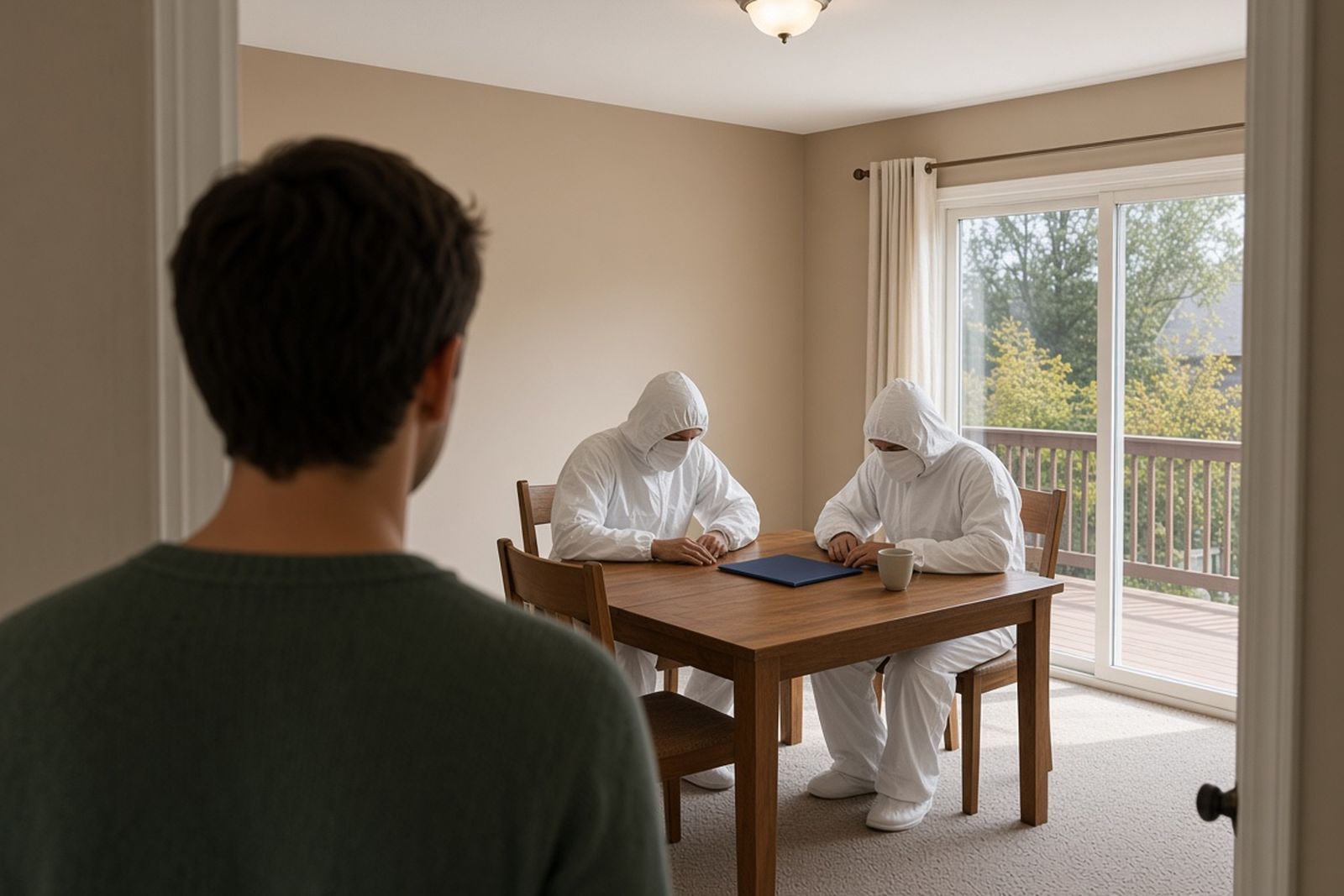
Here is a made-up case. A widower's adult daughter has flown in to help. The funeral home has given her two provider names. She opens the checklist on her phone in the driveway and calls the first company. The coordinator quickly confirms licenses, general liability coverage, and that workers are trained under the bloodborne germ standard. He offers to email the certificates. She ticks those items. When she asks where the waste goes, he says they use a licensed hauler and can provide a waste shipping record. She ticks that too. Then she asks how they handle a family's personal belongings. There is a pause, and he says they just remove whatever is soiled. She leaves that unticked. She asks about privacy. He says they can send an unmarked van but does not mention plain clothes or setting up out of sight. She leaves it partly open. The readiness score shows most items confirmed, with belongings and privacy still open. She copies the open questions and emails them to both companies. The second provider replies that same day with a written belongings policy. It requires a named family member's consent before anything is thrown out. That difference, not the price, decides who she hires.
Numbers behind vetting checklist decisions
- 34,696
Federal OSHA conducted 34,696 inspections in fiscal year 2024 and has roughly one compliance officer for every 70,000 workers.
Read with care: Excludes inspections by state-plan agencies.
Source: OSHA (2024)United States, federal OSHA, FY2024
- 10 square feet
EPA says moldy areas smaller than about 10 square feet can usually be handled by the homeowner, while larger areas warrant professional guidance.
Read with care: Applies to mold; contaminated sewage or biohazard materials are treated differently.
Source: US EPA (2026)Residential guidance, United States
- $27.2 billion
IBISWorld sizes the broader U.S. remediation and environmental cleanup services industry at $27.2 billion in 2026, growing 1.5% that year.
Read with care: Includes soil, groundwater and hazardous-material remediation; biohazard cleanup is a small slice.
Source: IBISWorld (2026)United States, NAICS remediation services industry, 2026 estimate
- 3 steps
CDC defines sanitizing as reducing germs on surfaces to levels considered safe and disinfecting as killing remaining germs, with cleaning always performed first.
Read with care: CDC's consumer fact sheet does not state the 99.9% or 99.999% log-reduction figures often quoted; those come from EPA product testing standards.
Source: CDC (2023)United States, household surfaces, CDC consumer fact sheet
These figures are public research and agency data, not this network's own job records. Keep each number with its population, year and limits; none of them predicts cost, timing or outcome at a specific property.
Provider Vetting Checklist questions for suicide cleanup
What if a provider is offended by being asked so many questions?
A good company expects these questions and often has the answers ready in a packet. If a company gets annoyed at basic questions about licenses, insurance, training, and waste handling, that tells you something useful. You are hiring a crew to work inside your home at one of the worst moments of your life. Any professional will understand why you want proof in writing before they arrive.
Which checklist items matter most for a suicide scene specifically?
Beyond the safety basics, focus on the questions about talking with the family, personal belongings, and privacy. Ask whether they give you one main contact and how they keep relatives away from the room. Ask whether they take photos of items before throwing them out, and what they will say to a neighbor. Those answers show whether the company treats this as trauma-aware work or as a standard cleaning job.
How do I actually verify a license or insurance certificate?
Ask for the certificate and the license number. Then look up the number on the public search page of the agency that issued it in your state or county. For insurance, you can call the company listed on the certificate to confirm it is active. Rules vary by state and county. So check with the local office to learn which credentials are truly required, rather than trusting a laminated card at face value.
Does a high readiness score mean the provider is the right choice?
It means you have confirmed what the checklist covers, which reduces obvious risk. It does not measure workmanship, punctuality, or bedside manner. Combine the score with references, a written scope, and your sense of how the coordinator spoke about your family. Two providers with similar scores can differ a great deal in how they handle the day, so trust the conversation as well as the boxes.
Can I skip the checklist if the funeral home or police recommended the company?
A referral is a starting point, not proof. Funeral homes and officers often pass along names they have seen before. They may not know whether the company's credentials are current. Run every provider through the checklist no matter who suggested them. It takes a few minutes. It also gives you a written record of what was promised, which matters if anything goes differently than planned.
Can I work through the checklist during a phone call rather than in person?
Yes. Most items can be covered on a call, and many families prefer it because they can take notes or have a helper listen in. Ask the provider to email any documents they mention so you can confirm them later. Items about how the crew behaves in your home can be confirmed at the assessment. Mark those as pending rather than guessing, and revisit them once you have met the team.
How should I choose between two providers whose checklist results are close?
Look at the items where they differ, even slightly, and ask which matter most for your family. One may handle belongings more carefully, while the other offers a schedule that fits around services. Reread your notes about how each person spoke to you. When results are close, the provider who made you feel respected and unhurried is often the better fit for such a personal job.
Related community polls
Every count is a real visitor vote; nothing is seeded or padded. One vote per poll per device, and you can change your answer.
If you were coordinating cleanup after a suicide loss, who would you want to make the first call to a provider?
How important is it to you that a cleanup crew arrives in unmarked vehicles and plain clothing?
Other suicide cleanup tools
Cost Range Estimator
Set the affected area, surface types, severity and extras to see an educational cost range and the factors that move it.
OpenInsurance Claim Organizer
A guided checklist from finding the policy to tracking the carrier decision, with a printable summary of where the claim stands.
OpenFirst 24 Hours Planner
Tell the planner a few facts about the situation and get an ordered list of who to call, what not to touch, and what to photograph.
OpenWaste & Disposal Classifier
Five questions about the material point to the likely waste category and which authority to confirm the rules with.
OpenDIY or Call a Pro? Risk Check
Eight yes-or-no questions that produce a risk level and explain when professional help is the safer choice.
OpenMore on suicide cleanup
Suicide Cleanup services
Learn what cleanup after a suicide loss involves. See how scene release, approval, disinfecting, belongings, and records all work to protect your family.
Costs explained
What drives the price, published cost ranges, and how to read a written quote line by line.

Insurance and payment
Which policies may respond, how to document a claim, and what to do if coverage is denied.
Community polls
See how other families handled privacy, insurance, staying home, and picking a provider after a suicide loss. Add your own view without giving your name.

Knowledge quiz
Check what you know about hazards, who can approve work, sealing off the room, disinfecting, waste, and records. This gentle quiz is for families and helpers.
Articles and resources
Read longer articles on helping people who lost someone to suicide, working with landlords and executors, and what caring, trauma-aware cleanup should look like.
Field guides
Step-by-step guides walk you through approval, privacy requests, insurance questions, and when to go back in after a suicide in a home or rental.