Short answer
How long suicide cleanup takes depends on the room and what it is made of, whether fluid reached beneath carpet or into walls, how much time passed before your loved one was found, and whether odor treatment or keepsake sorting is needed. The medical examiner's release, your own readiness and any repairs also affect the schedule. A provider can give you a dependable plan after an on-site assessment.
You do not have to decide right away
In the first hours after a suicide loss, many people feel pressure to fix everything at once. Please know that you are allowed to pause. Once the police and the medical examiner or coroner have released the home, cleanup can start whenever you are ready, and for some families that means waiting a little while.
There are good reasons to move sooner in some situations. If you live in the home and have nowhere else to stay, if children need their rooms back, or if the weather is warm, a faster start may be kinder. If you can stay elsewhere, taking a little time to breathe and gather support is completely reasonable.
While you wait, keep the door to the affected room closed, keep pets out and do not attempt any cleaning yourself. Those steps protect your health and prevent the area from growing.
From the first call to the first day of work
The first call is usually short. A caring provider asks where the home is, which room is involved, what the floors and furniture are made of, when the home was released and whether anyone is living there. Graphic questions have no place in that call. If you cannot face the call, a family member or friend can make it for you.
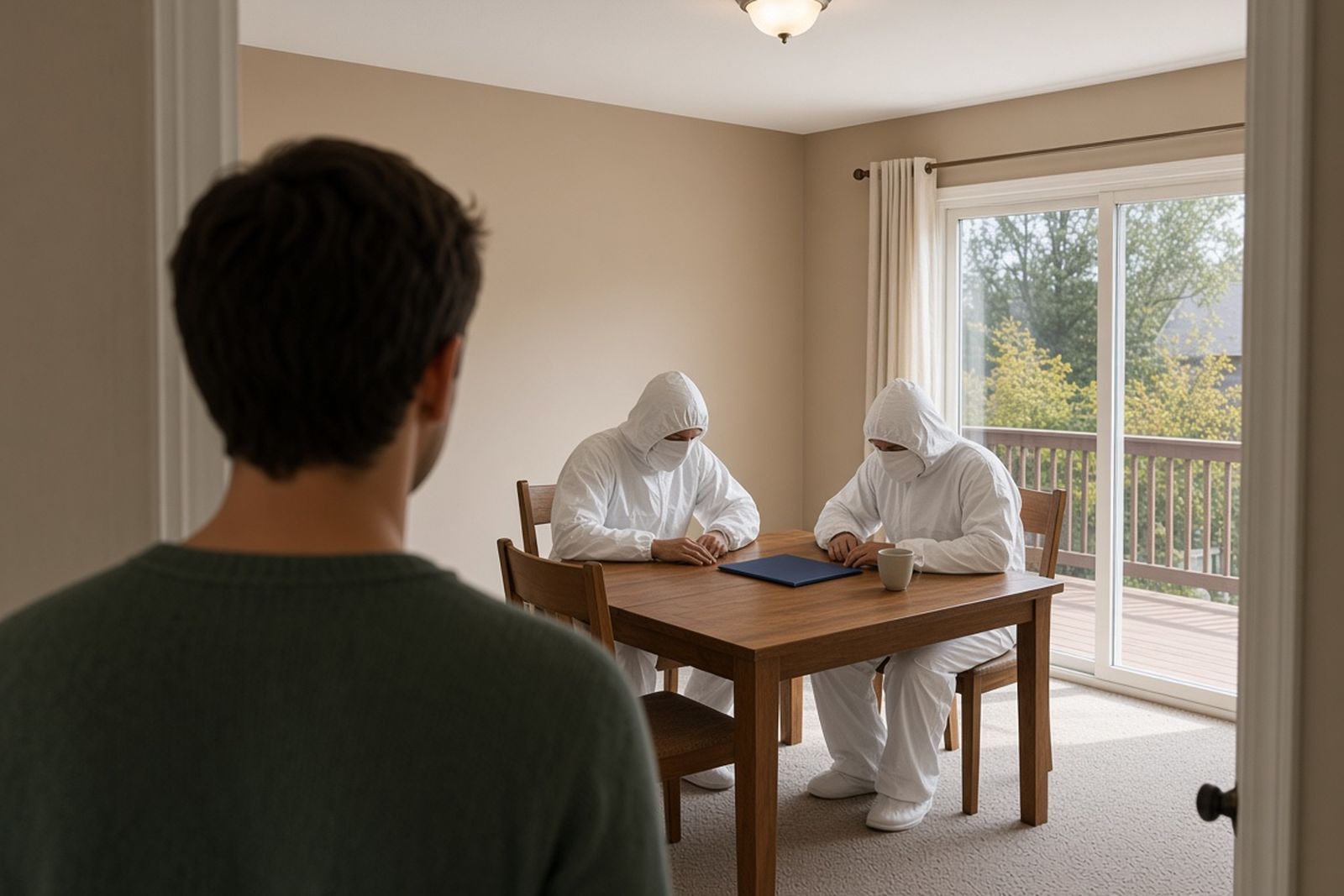
Next comes an assessment. A supervisor visits, looks at the room in protective gear and writes a scope explaining what will be cleaned, what will be removed and how personal items will be handled. You do not need to be in the room, or even in the house, during the visit.
After you or your representative approve the scope, the crew schedules the work. Some families approve on the spot. Others want to read it with a trusted person first or check with an insurer. The timeline flexes around those choices.
What determines how long the cleaning takes?
The room matters more than anything else. Bathrooms with tile, tubs and sealed counters can often be cleaned and disinfected in place, which tends to be quicker. Bedrooms and living areas with carpet, mattresses and upholstered furniture usually require more removal, and removal takes time.
What lies beneath matters too. When fluid passes through carpet into the pad and subfloor, or wicks into drywall behind a baseboard, the crew must open those areas, clean or remove the affected material and sometimes seal the structure before the room is finished.
Time before discovery is another factor. If your loved one was not found for a while, there may be more migration into materials and stronger odor, both of which extend the work. A gentle provider will explain this without making you feel responsible for circumstances you could not control.
- Type of room and its surfaces
- Porous items that must be removed, such as carpet or a mattress
- Whether fluid reached subfloor or walls
- Odor that needs its own treatment
- Keepsakes that need careful sorting or cleaning
- Access, such as stairs, elevators or building rules
How long might odor treatment add?
Odor usually improves as soon as the source is removed. When it lingers, providers may seal cleaned surfaces, run HEPA air filtration or use deodorizing equipment. Some of these methods need the home to be empty of people and pets while they run, and the crew may return afterward to check the air.
Ask the provider to tell you in advance whether odor treatment is likely, how long the home must stay empty and how they will confirm the result. That way you can plan where to stay and when to come back.
A faint smell of cleaning products in the first day or so is normal. A stronger odor that returns later is a signal to call the provider back, and a reputable one will come.
Keepsakes are worth the extra time
Setting aside keepsakes adds time, and that is a good thing. Before work starts, a thoughtful crew will ask what matters to you: a phone, glasses, a ring, photos, a journal, a favorite sweater or items with spiritual meaning. They will set aside personal items they find so that you can decide about them later.
Some items can be cleaned and returned the same day. Others take longer, or cannot be saved, and the crew should ask before anything personal is discarded. If you are not ready to look at anything, ask them to seal and label items so you can open them when you choose.
If a note or letter is found, the crew should hand it to the family or authorities, unread and treated with respect.
One family's timeline
Here is a hypothetical example. A woman learns that her younger brother has died by suicide in the spare bedroom of the house they shared. After the medical examiner releases the home in the evening, she stays with a friend. Two days later, her friend calls a provider for her.
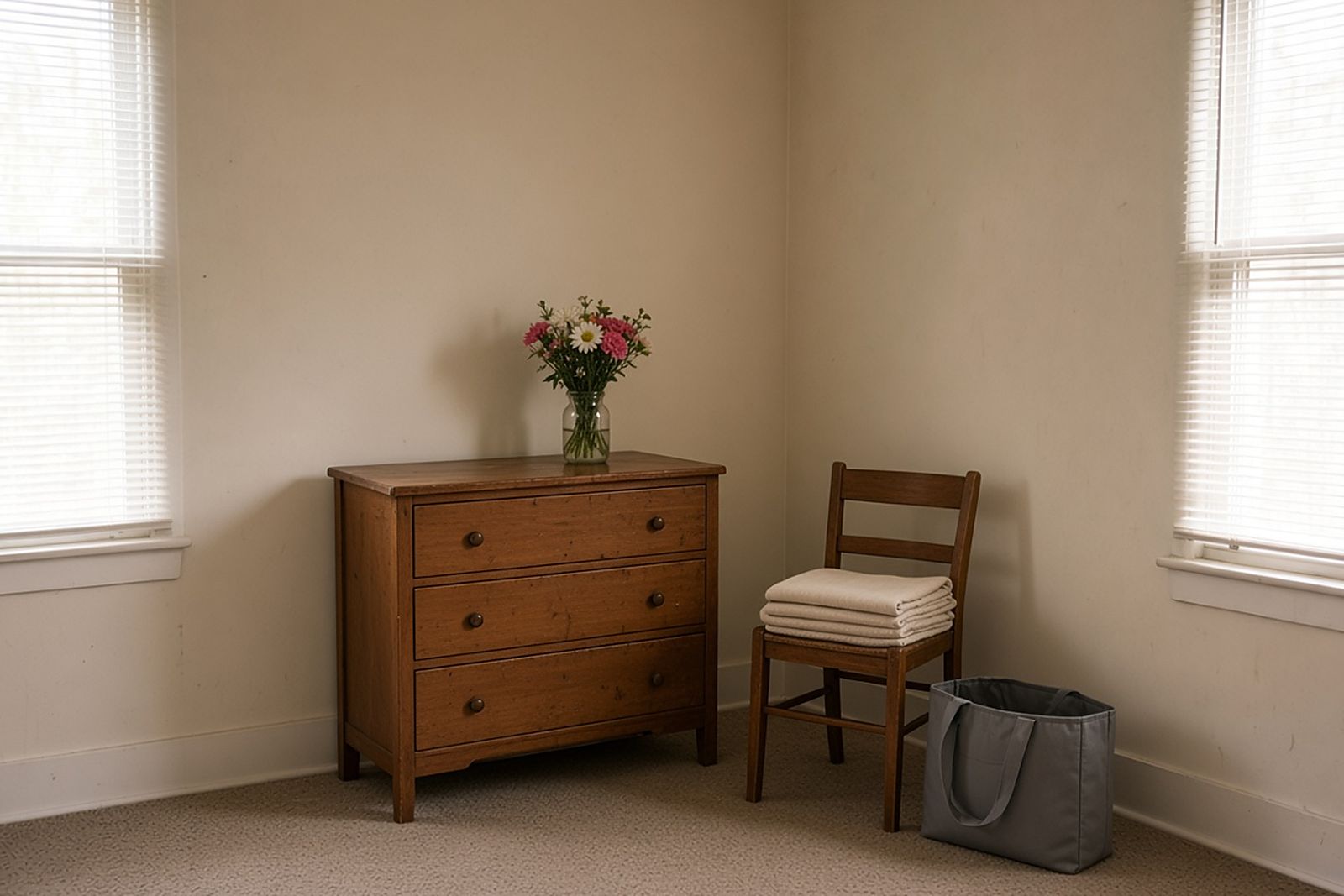
The supervisor visits the next morning while the sister waits at a café nearby. The spare room has carpet over a concrete slab, a futon, a bookshelf and a closet. The futon and part of the carpet and pad are affected. The concrete beneath has a light stain but is sound. The bookshelf has a few spots on its painted surface.
The sister approves the scope by phone and asks the crew to look for her brother's guitar picks, a watch and a notebook. The crew works through that afternoon. They remove the futon, carpet and pad, clean and disinfect the concrete and bookshelf, apply a sealer to the slab and run air filtration overnight. The next morning they verify the room, return the watch and notebook in a sealed bag and leave the guitar picks, cleaned, in a small envelope.
The sister does not go into the room for another week. When she does, she brings her friend. This example is fictional and meant to show one possible flow. Your experience may be quite different.
Repairs and other things that shape the schedule
Cleanup companies remove and decontaminate, but many do not rebuild. If carpet, drywall or a section of floor was taken out, a flooring contractor or handyman may need to replace it afterward. The provider's closing summary should list what needs repair so you can arrange it when you are ready.
Some families want repairs done quickly so the room looks normal again. Others prefer to leave it empty for a while, or to change its purpose entirely, perhaps turning a bedroom into an office or a place for quiet reflection. There is no correct choice and no deadline.
If you rent, your landlord may handle repairs through their own contractor. Share the closing summary so they know exactly what was removed, leaving out any personal details, such as the list of belongings returned, that you would rather keep private.
Outside parties sometimes add steps. An insurer may want to review the scope before approving work. A landlord or condominium association may need notice before the crew uses a service elevator or loading area. Removed materials must be packaged and transported as regulated waste, and requirements differ across the country.
Your own availability shapes the calendar too. If you want to be away while the crew works, or you need the room finished before a memorial gathering or a relative's visit, say so at the start. Providers can often arrange the order of work around those wishes, but only if they know about them early.
Asking the provider to put the schedule in writing helps. It should say when they will arrive, what each visit covers, when you can safely re-enter and when you will receive photos, an inventory and disposal records.
If something in the schedule changes, such as finding that fluid reached farther than expected, the provider should call you or your helper before extending the work, explain what they found in plain language and confirm any change in cost.
Support while this is happening
Cleanup is a practical task inside a much larger loss. You may feel numb, angry, guilty or deeply sad, sometimes all in one hour. Those reactions are common after suicide, and they deserve care.
If you or anyone close to you is struggling or thinking about suicide, call or text 988 to reach the 988 Suicide and Crisis Lifeline. Suicide loss survivor groups, grief counselors and faith communities can offer ongoing support as the weeks go on.
You do not have to move through this on anyone else's timeline. Let the crew handle the room, and give yourself as long as you need for everything else.