Suicide Cleanup: Process & What to Expect
Property-specific walkthroughs for suicide cleanup: assessment, scope approval, hazard controls, material decisions, documentation, verification, and restoration handoff. Not every phase applies to every incident.
Articles in this group walk through a suicide cleanup from the first phone call to the final walk-through. The language is plain and gentle. They explain how a provider confirms that the scene has been released. They show how the affected area is closed off from the rest of the home. They explain why workers remove soiled soft materials before they clean and disinfect what is left. You will also read about checks for how far fluid soaked in, such as under floors or behind baseboards. You will learn about the checks done after disinfecting. None of these posts describe how a death happened. All of them focus on what families can expect to see, hear, and decide.
Get an email reply about suicide cleanup
Send a short message to the follow-up inbox. A coordinator can reply by email. This form does not send emergency help; call 911 first if anyone is in danger.
Knowing the general shape of the work can ease some of the doubt that follows a loss. You may be asked to approve removing carpet or furniture. You may need to decide whether certain belongings should be set aside for cleaning. You may also pick a time when family members will be away. Knowing why each stage happens in its order lets you follow the crew's thinking without having to watch. These posts also explain what the final records packet usually holds. That way you know which records to keep for insurers, landlords, or the estate once the provider is done and the room is ready for repairs.
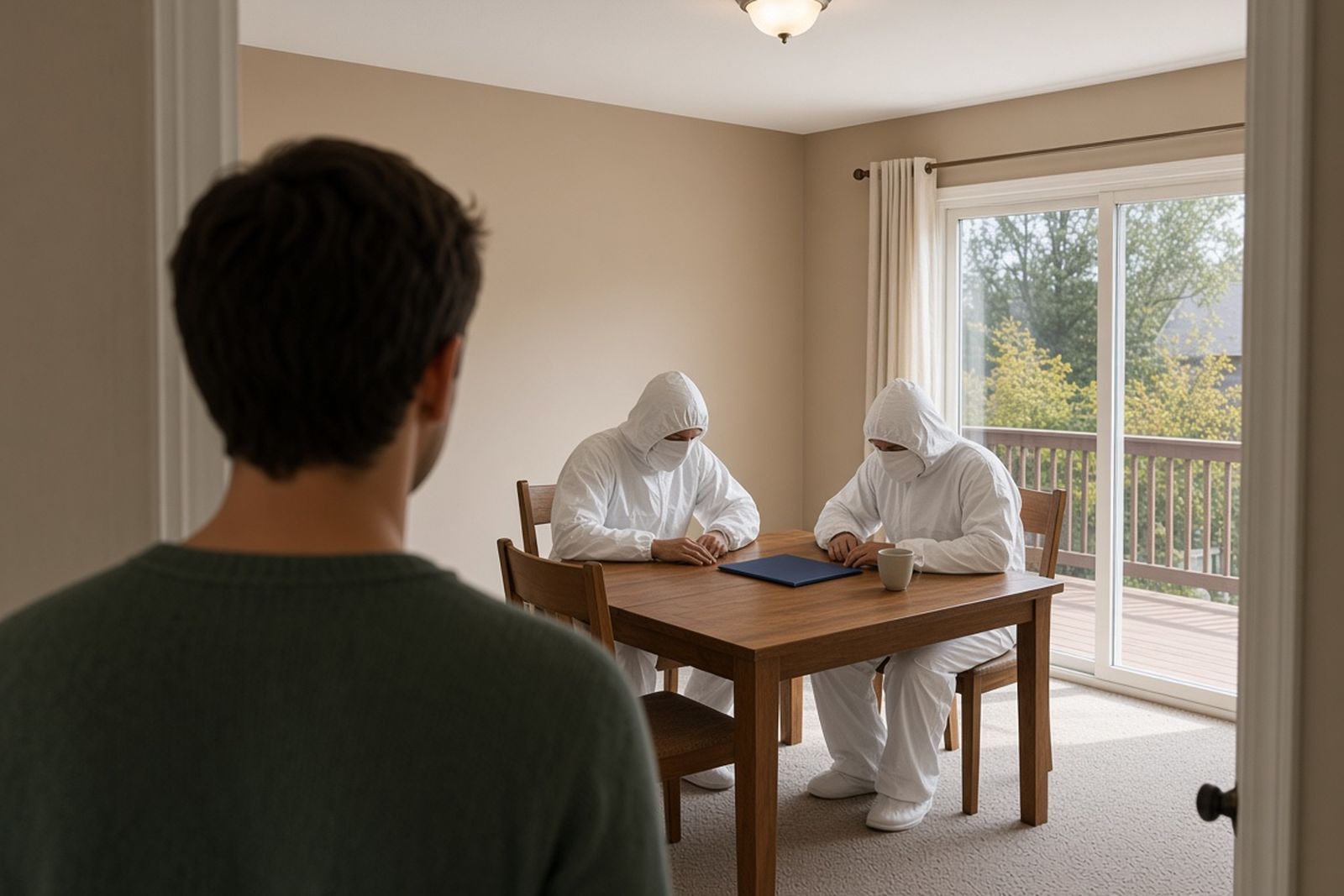
What to Expect During Professional Suicide Cleanup
A gentle walk-through of professional cleanup after a suicide at home: first contact, assessment, keepsakes, the work itself, verification and what comes after.
After authorities release the home, a suicide cleanup provider talks with you or a designated helper, assesses the affected area, and writes a scope. The crew asks which personal items to save, contains the space, removes and disinfects affected materials, handles regulated waste and verifies the result. You do not need to be present, and you should receive clear records and a respectful, discreet team.
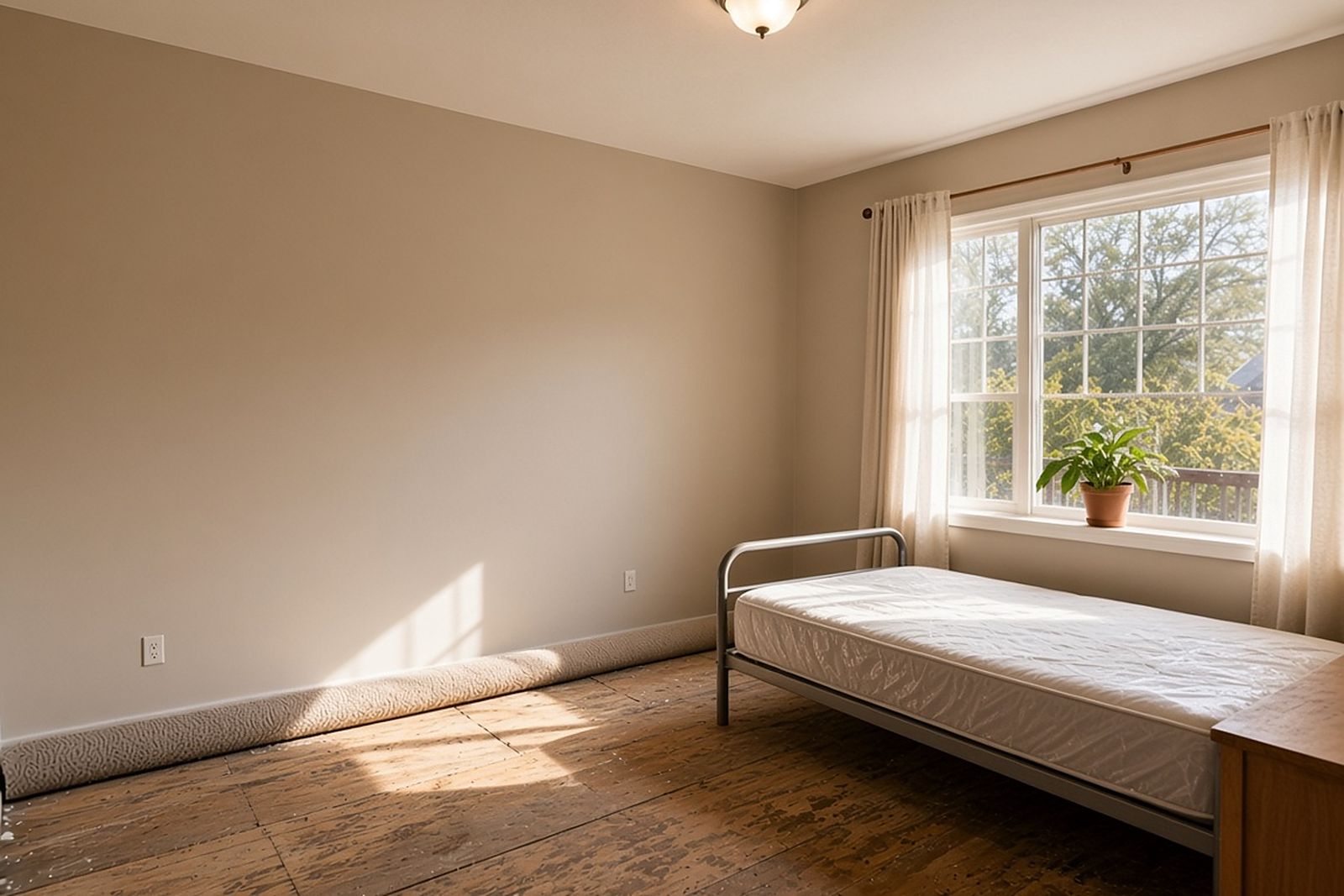
How Long Does Suicide Cleanup Take?
What shapes the timeline for suicide cleanup at home, from the medical examiner's release to keepsakes, flooring, odor and the day you choose to go back in.
How long suicide cleanup takes depends on the room and what it is made of, whether fluid reached beneath carpet or into walls, how much time passed before your loved one was found, and whether odor treatment or keepsake sorting is needed. The medical examiner's release, your own readiness and any repairs also affect the schedule. A provider can give you a dependable plan after an on-site assessment.
Urgent Suicide Cleanup: What to Do Before a Provider Arrives
Gentle, practical steps for the hours after a suicide at home and before a cleanup team arrives: getting help, caring for each other and protecting the space.
Before a suicide cleanup provider arrives, call 911 if you have not already and follow responders' guidance. Once police and the medical examiner leave, close the affected room, keep children and pets away, and do not try to clean anything yourself. Ask someone you trust to coordinate calls, and reach out for support, including the 988 Suicide and Crisis Lifeline, for yourself and others.
Sourced figures on process & what to expect
- 616,000
U.S. emergency departments recorded about 616,000 visits for self-harm injuries in 2022.
Read with care: Survey-based estimate; excludes people who did not seek care.
Source: CDC National Center for Health Statistics (2022)United States, 2022, emergency department visits
- 157.4 per 10,000
Janitors and cleaners in private industry had 157.4 nonfatal injuries and illnesses involving days away from work per 10,000 full-time workers in 2019.
Read with care: Counts only cases with days away from work and does not isolate injuries from chemical or biohazard exposure.
Source: BLS (2019)United States, private industry, janitors and cleaners except maids and housekeeping cleaners
- 20.4%
US poison centers received 45,550 exposure calls related to cleaners and disinfectants in January-March 2020, a 20.4% increase over the same period in 2019.
Read with care: Reflects calls, not confirmed poisonings, and covers an unusual pandemic period with surging disinfectant use.
Source: CDC (2020)United States, National Poison Data System, January-March 2020 vs 2019
These figures are public research and agency data, not this network's own job records. Keep each number with its population, year and limits; none of them predicts cost, timing or outcome at a specific property.
What research has found
Findings from published studies of people and properties in situations like this one. They describe what researchers observed in a specific group; they are not predictions for your case.
Shared meals and ordinary routines provided continuity.
Men described internal and gender-related obstacles to asking for support.
Process & What to Expect: common questions
Do family members need to be home while the crew works?
No. Most families choose to be elsewhere, and many providers encourage it. One designated contact can remain reachable by phone to answer questions or give consent for discarding items. The crew can share photographs afterward if you want them, or simply confirm in writing that the work is finished. Being absent does not mean losing control over decisions.
Why might the crew need to remove flooring or drywall?
Fluids can soak through carpet into the padding and subfloor. They can also wick into the bottom of a wall. You often cannot see this from above. When soft materials cannot be cleaned and disinfected in a reliable way, removing them is the safer choice. A careful provider will explain each removal ahead of time. They will record it for your files and any insurance claim.
What happens at the end of the job?
The provider usually walks through the area with the family contact or the owner. They go over what was removed and cleaned. Then they hand over photos, product information, and waste paperwork. Some companies do surface tests to confirm the work and share the results. Before you sign off, ask what is left for other trades, such as new flooring or painting.
Can the crew work while we are holding a wake or visitation at the house?
It is usually better to plan the work around family gatherings. But if the timing overlaps, ask the provider how they would keep the affected room sealed, quiet, and out of sight. They may use a separate door and avoid moving equipment while guests are there. Many families would rather hold gatherings somewhere else, or pause the work for the day to keep things calm.
Who should hold the house key while the crew is working?
Choose one trusted person, such as the family contact, executor, or property manager, to hand over and collect the key. Ask the provider how they secure the home at the end of each day and who on the crew will hold the key. Note the arrangement in writing. If there is a lockbox or alarm code, share it only with the crew lead and change it afterward.
What happens if the crew finds valuables or cash in the room?
A professional crew should set valuables aside, document them, and return them to the designated family contact, not leave them loose in the home. Ask how they record what they find, for example with a simple list and photos. If anything is contaminated, they should explain whether it can be cleaned. Having this conversation before work begins protects everyone and builds trust.
Will someone from the company check in with us after the job is finished?
Many providers make a follow-up call or visit to confirm there are no remaining concerns, such as odor or a spot that was missed. Ask about this in advance. Some families welcome the check-in, while others prefer no further contact. Tell the provider which you prefer, and make sure you know how to reach them if something comes up later.
Related community polls
Every count is a real visitor vote; nothing is seeded or padded. One vote per poll per device, and you can change your answer.
If you were coordinating cleanup after a suicide loss, who would you want to make the first call to a provider?
How important is it to you that a cleanup crew arrives in unmarked vehicles and plain clothing?
More on suicide cleanup
Suicide Cleanup services
Learn what cleanup after a suicide loss involves. See how scene release, approval, disinfecting, belongings, and records all work to protect your family.
Costs explained
What drives the price, published cost ranges, and how to read a written quote line by line.
Insurance and payment
Which policies may respond, how to document a claim, and what to do if coverage is denied.
Planning tools
Six short, private tools help you plan the first day, check risk, vet a provider, estimate cost, sort out a claim, and understand waste.
Community polls
See how other families handled privacy, insurance, staying home, and picking a provider after a suicide loss. Add your own view without giving your name.
Knowledge quiz
Check what you know about hazards, who can approve work, sealing off the room, disinfecting, waste, and records. This gentle quiz is for families and helpers.
Field guides
Step-by-step guides walk you through approval, privacy requests, insurance questions, and when to go back in after a suicide in a home or rental.