Short answer
Protective equipment for suicide cleanup is chosen after a quiet hazard assessment of the affected room. The crew lead considers what surfaces are involved, whether fluid has soaked into materials, how small and ventilated the space is, whether anything is broken and which cleaning products will be used. Those findings guide gloves, suits, eye protection, footwear and respirators, and where the crew changes discreetly.
Assessment comes before gear
Every loss is different, and so is every room. The space where your loved one died may be a bathroom, a bedroom, a garage or a closet. It may have tile floors or carpet, open windows or none at all. The crew cannot know what protection is right until someone has looked carefully and kindly at what is there.
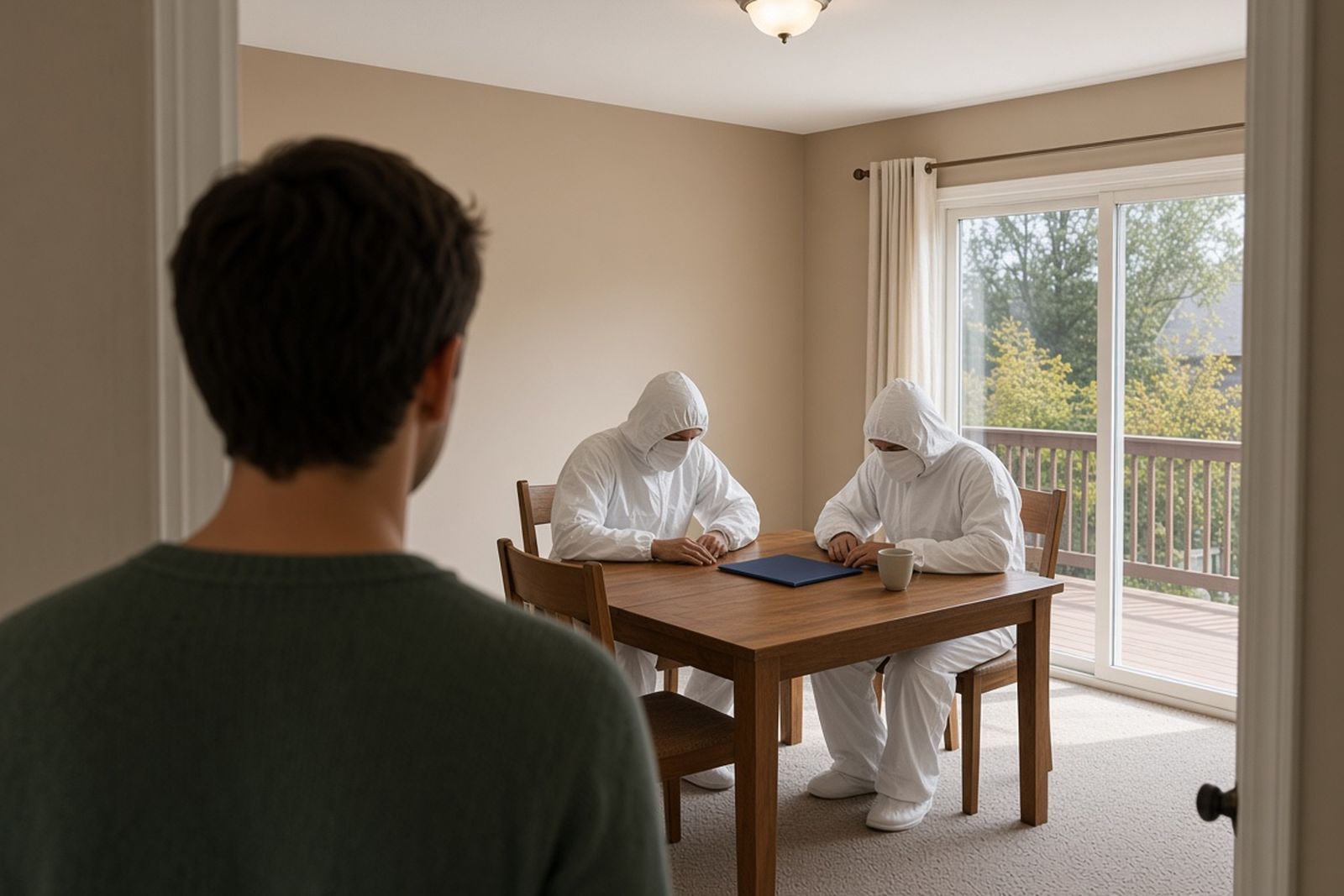
Federal workplace rules support that approach. OSHA's general PPE standard asks employers to assess hazards before selecting equipment and to record that assessment in writing. For a family, the most important thing to know is that a careful provider will not arrive with a one-size-fits-all kit. They will plan for your home specifically.
You do not need to be present for the assessment. Many families prefer to be elsewhere, and a relative, friend or property manager can let the crew in.
Where suicide cleanups usually take place
Most take place at home. CDC's National Violent Death Reporting System found that in 2022, 71.5% of suicides it recorded occurred in a house or apartment. That means crews most often work in private, personal spaces filled with belongings that matter to the family.
Home settings shape protective equipment in practical ways. Bathrooms and closets are small, so vapors from cleaning products concentrate quickly. Bedrooms have mattresses, carpet and upholstered furniture that can absorb fluid. Garages may be hot or poorly ventilated. Each of these conditions changes what the crew wears and how long they can safely work before taking a break.
Homes also bring neighbors, shared hallways and driveways that can be seen from the street. A thoughtful plan considers privacy along with safety.
What does a gentle hazard assessment include?
The crew lead walks through the affected area, usually alone, and makes notes. They do not need to ask you for details about how your loved one died. A respectful provider will ask only what they need, such as which room is affected and whether anyone has entered since the police and medical examiner left.
The assessment typically covers several points:
If the assessment reveals something unexpected, such as fluid that has reached the subfloor or a stain behind a piece of furniture, the lead should update the plan and let your chosen contact know before going further. Changes in scope are common, and a gentle explanation helps you avoid surprises later.
- Which surfaces are affected, and whether they are porous or sealed
- Whether fluid may have soaked below the surface into padding, grout or subfloor
- Whether anything is broken or sharp
- The size of the room and how well it ventilates
- Whether time passed before discovery, which can add odor
- Which disinfectants and cleaners will be used
- How items will be carried out without being seen
The protective equipment a crew may wear
Gloves are the first layer of protection. Many technicians wear two pairs, a thin nitrile glove beneath a sturdier outer glove, and change the outer pair often. If anything in the room is broken, they add cut-resistant gloves.
Protective suits cover clothing and skin, with hoods for the hair and neck. Boot covers keep the rest of your home clean as technicians move in and out. Goggles or face shields protect the eyes during scrubbing or when lifting materials that may splash.
Respirators may be worn in small rooms where disinfectant fumes build up, where materials such as carpet, caulk or drywall need to be removed, or where odor is strong. Workers who wear tight-fitting respirators need a medical evaluation and fit testing under OSHA rules, so the seal actually protects them.
The employer supplies all of this equipment at its own cost, which allows technicians to change gloves and suits as often as the work requires. Frequent changes are one of the simplest ways to keep contamination from reaching hallways, stair rails and door handles in the rest of your home.
Warmth is another consideration. Suits and respirators hold heat, and small rooms can become stuffy. Careful crews take regular breaks outside the room, drink water and rotate tasks so no one becomes fatigued, which also helps them work more carefully in your loved one's space.
Why full protection is needed even if the room looks clean
Sometimes a room appears nearly clean after the police and medical examiner leave, or after a relative has tried to help. Crews still wear full protection, because fluids can remain in places no one can see, and because dried blood is not automatically harmless.
Research published in the Journal of Infectious Diseases in 2014 found that hepatitis C virus in dried blood remained infectious for up to 6 weeks at 4°C and 22°C, which is roughly refrigerator and room temperature. Trained crews treat every trace as potentially infectious for that reason. This practice is applied to every job and says nothing about your loved one.
If you or someone else has already touched the area, please do not blame yourself. Wash exposed skin with soap and water, set aside cloths or tools in a sealed bag for the crew and call a doctor if there was a cut or a splash near the eyes or mouth.
Protecting your privacy while wearing all that gear
Protective suits and respirators can be distressing to see, especially for children or for neighbors who may not know what happened. Many compassionate providers take steps so that the equipment is not on display.
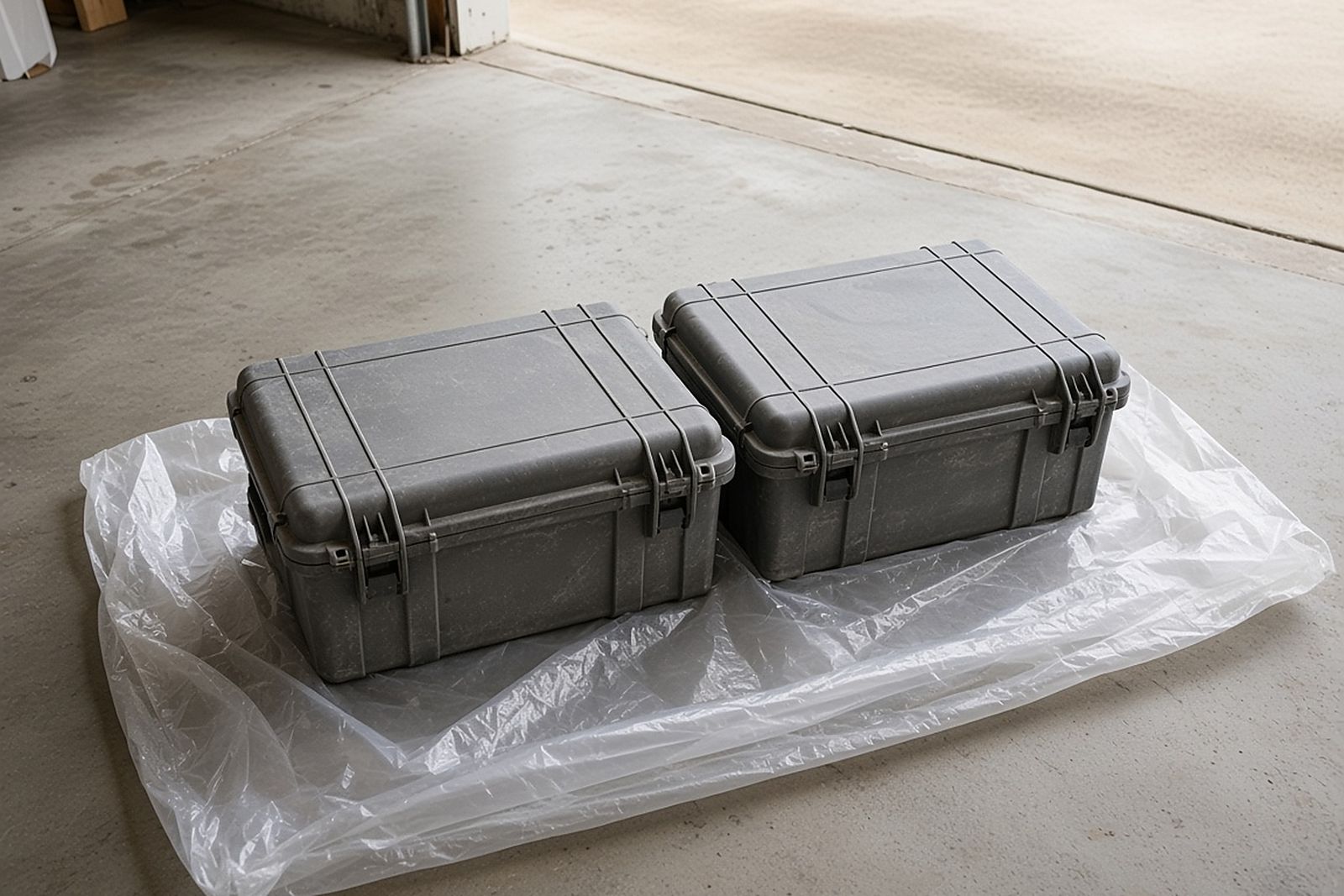
Crews often arrive in unmarked vehicles and put on their gear inside, in a garage or a room near the work area. They set up a changing area just outside the affected room, remove their equipment there when they finish and bag it immediately. Large items leaving the house are wrapped so they do not draw attention.
You can ask for these accommodations directly. A caring provider will be glad to plan the work around your family's needs, including scheduling it for a time when vulnerable relatives can be away.
Protective planning in one home
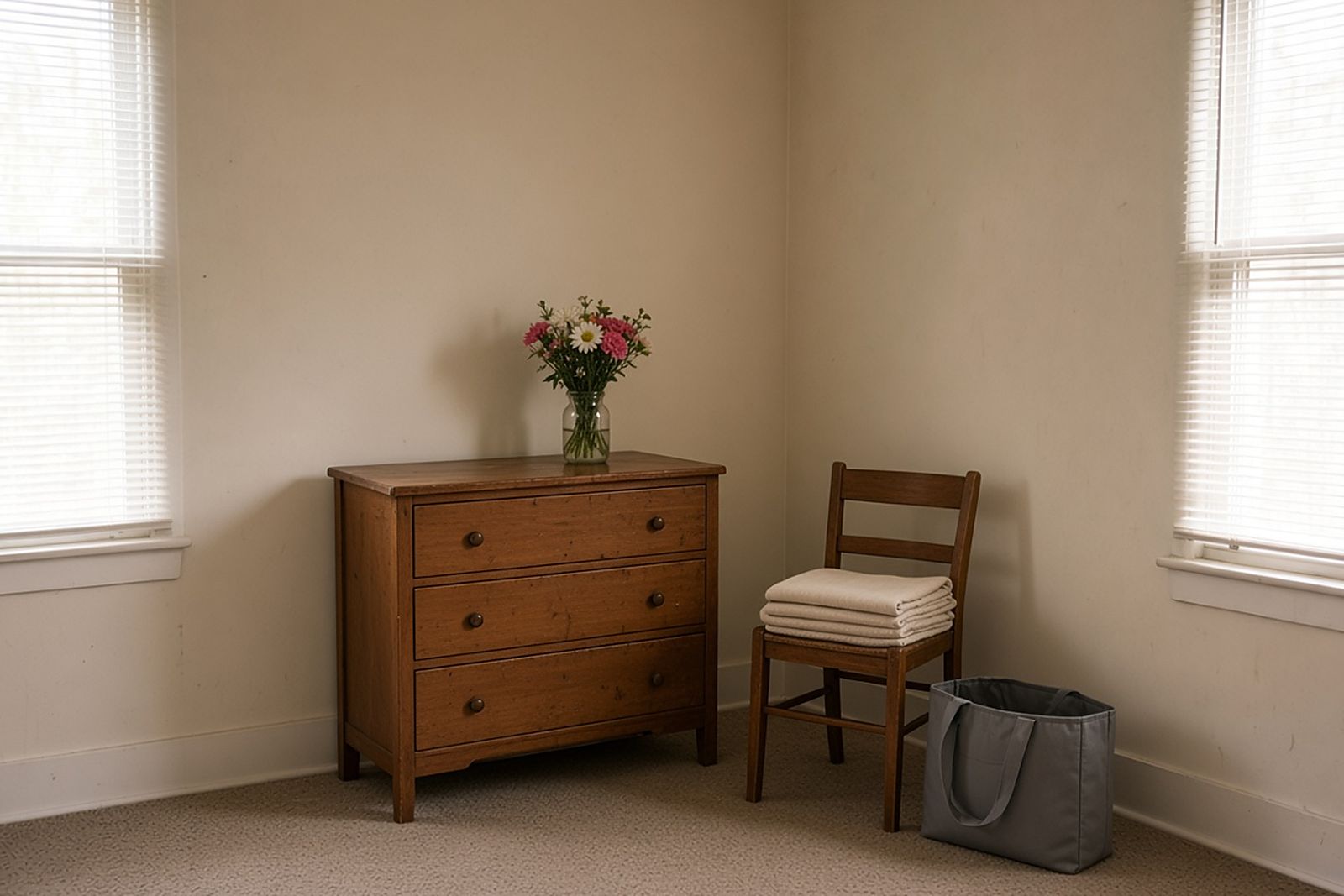
The home described here is invented for illustration. A mother loses her teenage daughter to suicide in the daughter's bedroom. The bedroom is carpeted and shares a wall with a younger brother's room. The mother's sister arranges the cleanup while the family stays with friends.
The crew lead's assessment notes that the carpet and pad beneath the bed are affected, along with part of a fabric headboard. The room has one window and a heating vent near the floor. Nothing is broken.
Based on those findings, the crew wears nitrile inner and outer gloves, protective suits with hoods, boot covers and goggles. Because carpet and pad will be cut out and a disinfectant will be used in a closed room, the two technicians doing that work wear fit-tested half-face respirators. The heating vent is covered so nothing travels into the brother's room. The crew changes in the garage and wraps the carpet and headboard before carrying them to an unmarked van.
A stuffed animal, a necklace and a journal are set aside for the mother, unread. When the work is done, the sister receives a short summary and information about 988 and local support for suicide loss survivors. This story is fictional and shared only to show how protective planning and compassion work together.
What can you ask a provider about protective equipment?
You do not need to understand gear to choose a careful team. A few gentle questions are enough, and a caring provider will answer patiently. Worker safety rules come from OSHA or your state's plan, while waste disposal rules come from your state's environmental or health agency.
It is also fine to ask whether the crew has worked with families after a suicide before and how they speak with grieving relatives. Kindness and patience are part of doing this work safely.
- Will you assess the room before choosing protective equipment?
- If respirators are needed, has each wearer been fit tested?
- Where will the crew put on and take off gear?
- Can you work at a time when my children or other relatives are away?
- How will you handle personal belongings you find?
Caring for yourself while the room is restored
Please let the crew carry this part of the burden. Your role right now is to grieve, rest when you can and lean on the people around you. Suicide loss can bring intense and confusing feelings, and all of them are understandable.
If you or someone in your family is struggling or thinking about suicide, call or text 988 to reach the 988 Suicide and Crisis Lifeline at any hour. Suicide loss survivor groups, grief counselors and faith communities can also offer steady support in the weeks and months ahead. Reaching out is a sign of strength, and you deserve care as much as anyone.