Short answer
You may feel a strong pull to clean after a suicide loss yourself, and that impulse comes from love. The critical differences are safety, thoroughness and emotional protection. Professionals treat body fluids as infectious, find what soaked beneath the surface, disinfect correctly, handle waste properly and document the work, while sparing you close contact with the place your loved one died. There are gentler ways you can help.
Why so many families want to clean it themselves
After a suicide at home, family members often feel an intense need to protect others from seeing the room. A parent may want to spare siblings. A spouse may not want strangers in the bedroom they shared. Some people worry about cost or privacy. Others feel that caring for the space is a final act of love.
Every one of these reasons is understandable. There is nothing wrong with wanting to help, and nothing wrong with you if you have already started.
This article explains the practical differences between cleaning yourself and hiring trained help, so you can choose what is right for you and your family with as much information as possible.
It may help to know that hiring help does not mean giving up control. You can decide who talks with the provider, which items are saved, whether you are nearby during the work and when you return to the room. A good company follows your wishes on all of these, so the process still reflects your care for the person you lost.
What health risks come with cleaning at home?
Blood and other body fluids can carry bloodborne pathogens such as hepatitis B, hepatitis C and HIV. This is true regardless of who your loved one was, because no one can know from a stain whether a pathogen is present. Dried material still carries risk, and scrubbing or vacuuming can release fine particles.
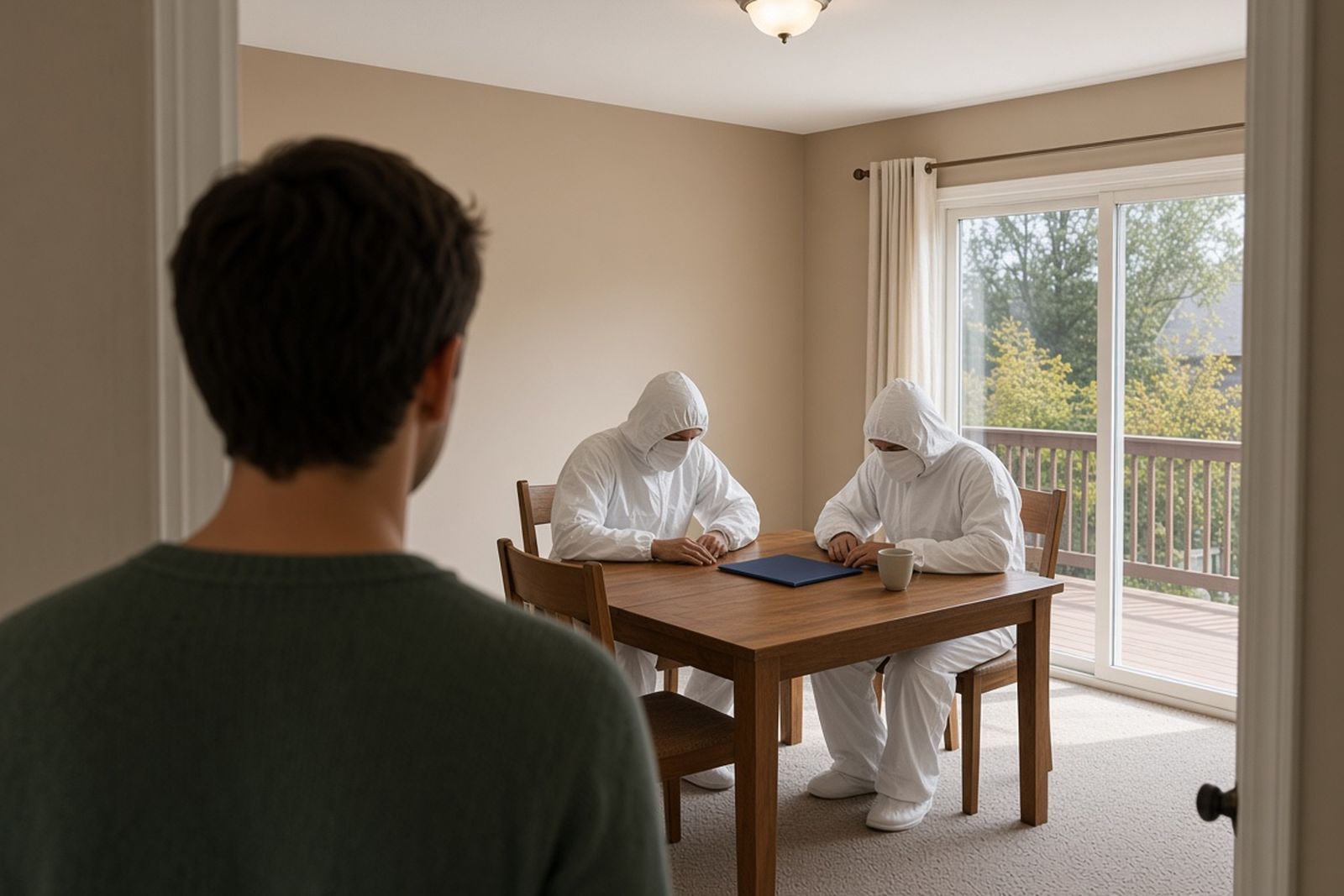
Professional technicians wear fluid-resistant suits, eye protection, doubled gloves and respirators when needed, and they work under a bloodborne pathogens program with training and vaccination. Household rubber gloves and a cloth mask are not designed for this.
Chemicals add another layer of risk. Mixing bleach with ammonia-based or acidic products creates harmful fumes, which can be especially dangerous in small spaces such as bathrooms. Strong products used on the wrong surface can damage finishes without making them safe.
If you have already cleaned some of the area, stop, wash your hands and any exposed skin well and set aside the cloths or tools you used in a sealed bag. If you were cut or splashed near your eyes or mouth, call your doctor or an urgent care clinic and explain what happened. Asking for medical advice is a sensible step, not an overreaction.
What a family often misses
What you can see is usually only part of what needs attention. Fluids travel downward and outward through carpet into pad and subfloor, through the seams of wood and laminate floors, into grout and behind baseboards. Mattresses and upholstered furniture absorb fluid into their inner layers.
A careful surface cleaning may make the room look much better, yet leave material beneath. Days or weeks later, a stain may reappear or an odor may develop. If some time passed before your loved one was found, this hidden spread can be larger.
Order matters too. Disinfectants do not work well on a surface still coated with organic material. Professionals remove materials that cannot be saved, clean what remains with detergents or enzyme products and only then apply an EPA-registered disinfectant, keeping the surface wet for the full contact time on the label.
Tools hold on to contamination as well. Sponges, mops, brushes and household vacuums used in the room can carry material into other parts of the home the next time they are used. Professionals either discard these items as waste or clean and disinfect reusable equipment under a written procedure.
- Carpet pad and subfloor under a visible spot
- Seams in wood, laminate or vinyl flooring
- Grout lines and caulk in bathrooms
- Inner layers of mattresses and cushions
- Baseboards and the lower edge of walls
Keepsakes: a slower, more careful process
When families clean on their own, they sometimes discard items in the rush of the moment and later wish they had kept them. Or they keep items that cannot be safely cleaned. Professionals slow this process down on your behalf.
A caring crew will ask before starting which items matter to you, set aside personal belongings they find, clean what can be cleaned and ask before discarding anything personal. They can photograph items that cannot be saved and seal others in labeled bags for you to open when you are ready.
If a note or letter is found, a respectful provider will hand it to the family or the authorities, unread.
Waste, records and cost
Materials soaked with body fluids, such as carpet, bedding and cleaning cloths, are generally handled as regulated waste in professional work. Crews bag and label them, then send them to a permitted facility and keep the paperwork. Household trash can expose sanitation workers and may not meet local requirements.
Records also help with practical matters. Insurers, landlords and future buyers may want to know what was done. A professional closing summary lists what was cleaned, what was removed, which products were used and how waste was handled. You can share only the parts you are comfortable sharing.
Cost is a common worry. Before deciding that professional help is out of reach, ask your homeowners or renters insurer whether the policy may respond, and ask the provider how they price work and whether they can send documentation directly to the insurer. You or a helper can ask these questions without committing to anything.
What is the emotional difference?
Cleaning the place where someone you love died by suicide means spending hours close to the physical reality of their death. Many people who have done it describe images and sensations that returned for a long time afterward.
Grief after suicide is already heavy. A 2012 review in Dialogues in Clinical Neuroscience by Young and colleagues reported that close relatives bereaved by suicide experience complicated grief at rates of 57% to 80%, compared with 14% to 28% among friends, coworkers and distant relatives. Those closest to the person, who are often the ones who feel they should clean, are also the ones carrying the most.
Letting trained people handle the room is not avoidance. It is a way of protecting your wellbeing and your memories of the person, so that the room does not become the strongest one.
How this can unfold for one family
The following story is an illustration rather than a real case. A man loses his wife to suicide in their bedroom. After the medical examiner releases the home, he decides to clean it himself so their teenage children will not have to see anything.
He strips the bed, bags the sheets and a blanket and scrubs the carpet with a store-bought cleaner late at night. The carpet looks lighter, but he cannot stop thinking about what he saw. A few days later, his sister notices an odor from the room and a shadow in the carpet that seems to be spreading.
She calls a professional provider. The technician finds that fluid had passed through the mattress and into the carpet pad and a small area of subfloor. The crew removes the mattress, carpet and pad, cleans and seals the subfloor and returns his wife's reading glasses and a framed photo from the nightstand, cleaned.
Later, the man tells a grief counselor that he wishes he had called for help first. This example is fictional, but it reflects what many families have shared about the toll of cleaning on their own.
Safe ways to help, and support for you
There are meaningful ways to care for your home without entering the affected room. Keep the door closed and keep pets and children away. Make a list of belongings you would like saved. Choose one person, perhaps a relative or close friend, to talk with providers. Call your insurer, or ask someone to call for you.
You can also ask the provider questions that matter to you: whether they use unmarked vehicles, how they handle personal items, when you can come back and what records you will receive. Choosing a careful, discreet team is itself an act of love for your family.
If someone in the family feels strongly about being involved, there are gentler roles to offer them, such as choosing which keepsakes to save, preparing a space where returned items can rest, or deciding what the room will become once it is ready again.
If you have already cleaned and are struggling with what you saw, please know that is a common and understandable reaction, and help is available. Talking with a grief counselor who understands suicide loss can make a real difference.
If you or anyone close to you is struggling or having thoughts of suicide, call or text 988 to reach the 988 Suicide and Crisis Lifeline, any time of day. Suicide loss survivor groups, faith communities and trusted friends can offer companionship in the weeks ahead. You do not have to carry this alone.