Suicide Cleanup: Health & Wellness
Privacy, decision-load, trauma-aware communication, and verified support resources for people managing suicide cleanup. Educational remediation content is not mental-health treatment.
Posts on health and wellness recognize that the hardest part of a suicide loss is not the cleanup. They offer gentle advice on caring for yourself and your family while practical tasks go on. That includes rest, eating, accepting help, and limiting how many choices you make in a day. Articles describe common grief reactions, such as numbness, guilt, anger, or trouble sleeping. They remind readers that these reactions are human, not signs of failure. They also explain why staying away from the affected room for a while is a fair choice. None of the content describes the death itself.
Get an email reply about suicide cleanup
Send a short message to the follow-up inbox. A coordinator can reply by email. This form does not send emergency help; call 911 first if anyone is in danger.
If you or anyone in your home is struggling, you can call or text 988 to reach the Suicide and Crisis Lifeline at any hour. People who lost someone to suicide often find it helps to connect with others who understand this kind of grief. Many communities have peer support groups made for just that. These posts point you toward those resources. They encourage you to get professional help when grief feels like too much. They also offer ideas for talking with children about the loss in ways that fit their age. Cleanup providers are not counselors. But a caring company can ease stress by handling details with care and speaking with kindness.
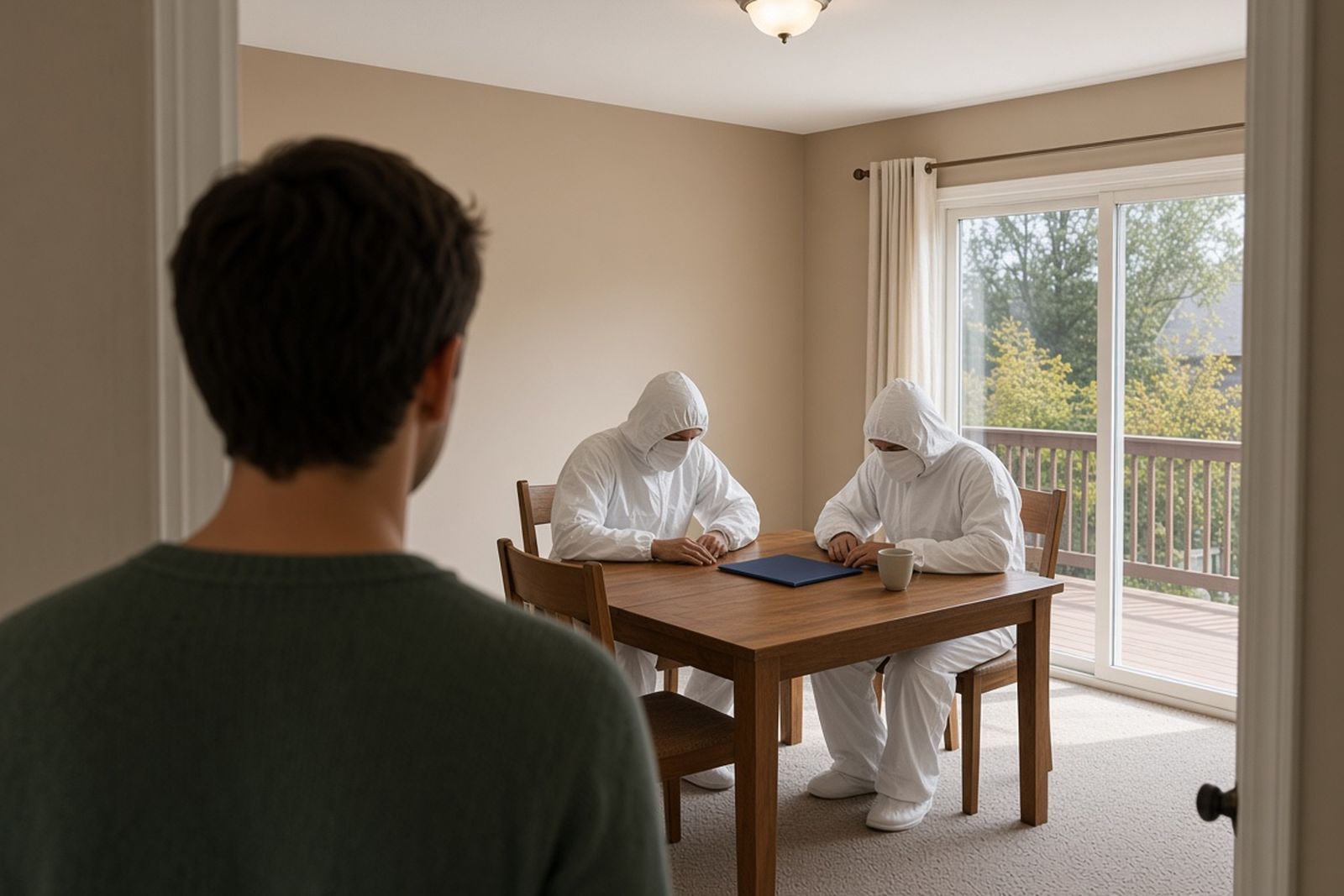
Managing Stress and Disruption During Suicide Cleanup
Gentle ways to manage the stress of suicide cleanup at home, including handing off tasks, easing back into the room, caring for kids and finding support.
Cleanup after a suicide at home often happens while you are in shock, grieving and full of questions. You can ease the strain by letting someone else coordinate the work, staying elsewhere while it happens, deciding about belongings later, returning to the room slowly with support and connecting with suicide loss survivor groups. If you are struggling, call or text 988 anytime.
Mental Health Resources During Suicide Cleanup
Where suicide loss survivors can find support while a home is being cleaned: 988, survivor groups, grief counselors, help for kids and ways to pace decisions.
A cleanup company can make a room safe, but it cannot care for your grief. While the work happens, lean on people and services built for suicide loss: the 988 Suicide and Crisis Lifeline by call or text, suicide loss survivor groups, grief counselors, your doctor, faith communities and school counselors for children. Keep property decisions small, paced and in trusted hands.
Sourced figures on health & wellness
- 52.5%
NVDRS recorded 44,917 suicides in 2022, 52.5% of them involving a firearm.
Read with care: NVDRS links death certificates, coroner/medical examiner and police reports; 2022 is the first year with all 50 states, and location is recorded for the injury site, not always the residence of the decedent.
Source: CDC (2022)United States, 50 states, DC and Puerto Rico, 2022
- 38,977 vs 9,847
In 2024, suicide deaths were about four times higher among U.S. males (38,977) than females (9,847).
Read with care: Sex differences partly reflect method lethality.
Source: CDC (2024)United States, 2024
- 71.3%
In 2021, 71.3% of NVDRS-recorded suicides occurred in a house or apartment and 54.3% involved a firearm.
Read with care: Earlier year; use as trend confirmation with the 2022 figure.
Source: CDC (2021)United States, 48 states, DC and Puerto Rico, 2021
These figures are public research and agency data, not this network's own job records. Keep each number with its population, year and limits; none of them predicts cost, timing or outcome at a specific property.
What research has found
Findings from published studies of people and properties in situations like this one. They describe what researchers observed in a specific group; they are not predictions for your case.
Some non-viewers said officials advised against viewing because of damage or decomposition.
Encountering the body at the site was not significantly associated with more nightmares or intrusive memories.
Health & Wellness: common questions
Is it normal to feel unable to go back into the room after cleanup?
Yes. Many people feel strong reactions to a space even after it has been fully restored. Some families rearrange the room, repaint, or use it differently, while others need time before entering at all. There is no correct timeline. A grief counselor or support group can help you work through these feelings at your own pace.
How can I support a child after a suicide in the home?
Use honest, simple language suited to the child's age, and let them ask questions. Reassure them that they are safe and not to blame. Keep routines as steady as possible, and watch for changes in sleep or behavior. A pediatrician or child grief specialist can offer guidance tailored to your family.
Where can I find a support group for suicide loss survivors?
Local hospitals, mental health groups, and faith groups often list support groups for people who lost someone to suicide. Some groups meet online. National suicide prevention groups keep lists as well. If you need help right now, the Suicide and Crisis Lifeline is there by call or text at 988. Reaching out is a sign of strength, not weakness.
How can I take care of myself physically during cleanup week?
Try to keep simple routines, such as eating regular meals, drinking water, and resting even if sleep is hard. Short walks or time outside can help. Let others handle errands and calls where possible. If you notice physical symptoms that worry you, such as chest pain or trouble breathing, seek medical care. Taking care of your body is part of getting through this.
Is it normal to feel numb rather than sad?
Yes. Many people feel numb or detached in the early days after a suicide loss. Numbness is a way the mind protects itself from overwhelming feelings. It does not mean you did not care. Emotions may arrive later, sometimes unexpectedly. If numbness lasts or you feel unable to function, talking with a counselor or calling or texting 988 can help.
How can friends support someone during the cleanup without intruding?
Offer specific, practical help, such as bringing a meal, running an errand, or staying nearby during the crew's visit. Let the person lead conversations about the loss. Avoid asking for details about what happened. Check in again after the cleanup is done, when others may have moved on. Small, steady gestures often mean more than grand offers.
When should we seek help for a child who seems to be struggling?
Children express grief in different ways, including changes in sleep, appetite, behavior, or school performance. If these changes continue or worsen, or if a child talks about wanting to die, contact a pediatrician, school counselor, or mental health professional promptly. You can also call or text 988 for guidance. Reassure children that their feelings are normal and that they are not to blame.
Related community polls
Every count is a real visitor vote; nothing is seeded or padded. One vote per poll per device, and you can change your answer.
If you were coordinating cleanup after a suicide loss, who would you want to make the first call to a provider?
How important is it to you that a cleanup crew arrives in unmarked vehicles and plain clothing?
More on suicide cleanup
Suicide Cleanup services
Learn what cleanup after a suicide loss involves. See how scene release, approval, disinfecting, belongings, and records all work to protect your family.
Costs explained
What drives the price, published cost ranges, and how to read a written quote line by line.
Insurance and payment
Which policies may respond, how to document a claim, and what to do if coverage is denied.
Planning tools
Six short, private tools help you plan the first day, check risk, vet a provider, estimate cost, sort out a claim, and understand waste.
Community polls
See how other families handled privacy, insurance, staying home, and picking a provider after a suicide loss. Add your own view without giving your name.
Knowledge quiz
Check what you know about hazards, who can approve work, sealing off the room, disinfecting, waste, and records. This gentle quiz is for families and helpers.
Field guides
Step-by-step guides walk you through approval, privacy requests, insurance questions, and when to go back in after a suicide in a home or rental.