Short answer
When a suicide cleanup provider proposes equipment, check that each item is tied to your loved one's room and its materials. Expect protective gear, named EPA-registered cleaners and disinfectants, containment, careful tools for keepsakes and removal, air filtration only when dust or odor call for it, and verification records. Ask about anything vague or costly that is not explained, and let a trusted person help you review it.
Do I really need to think about equipment right now?
Not in detail, and not alone. After a suicide loss, your energy belongs to yourself and the people around you. Still, a quick look at the equipment a provider plans to use can protect you from paying for things your home does not need, and it can reassure you that the work will be careful.
If reading a technical list feels like too much, ask a relative, friend or other trusted person to review it with the questions below. You can simply tell the provider that someone else will be handling the details. A caring company will understand and speak with that person directly.
The goal is simple: every piece of equipment should have a clear reason tied to the room where your loved one died, the materials in it and the belongings you want saved.
You may also find it helpful to know that a longer list is not automatically a better one. Some of the most careful providers propose fairly modest equipment for a small, hard-surfaced room, because that is all the space requires. What matters is that the list fits your home and that someone can explain it kindly and clearly.
Protective gear the crew should bring
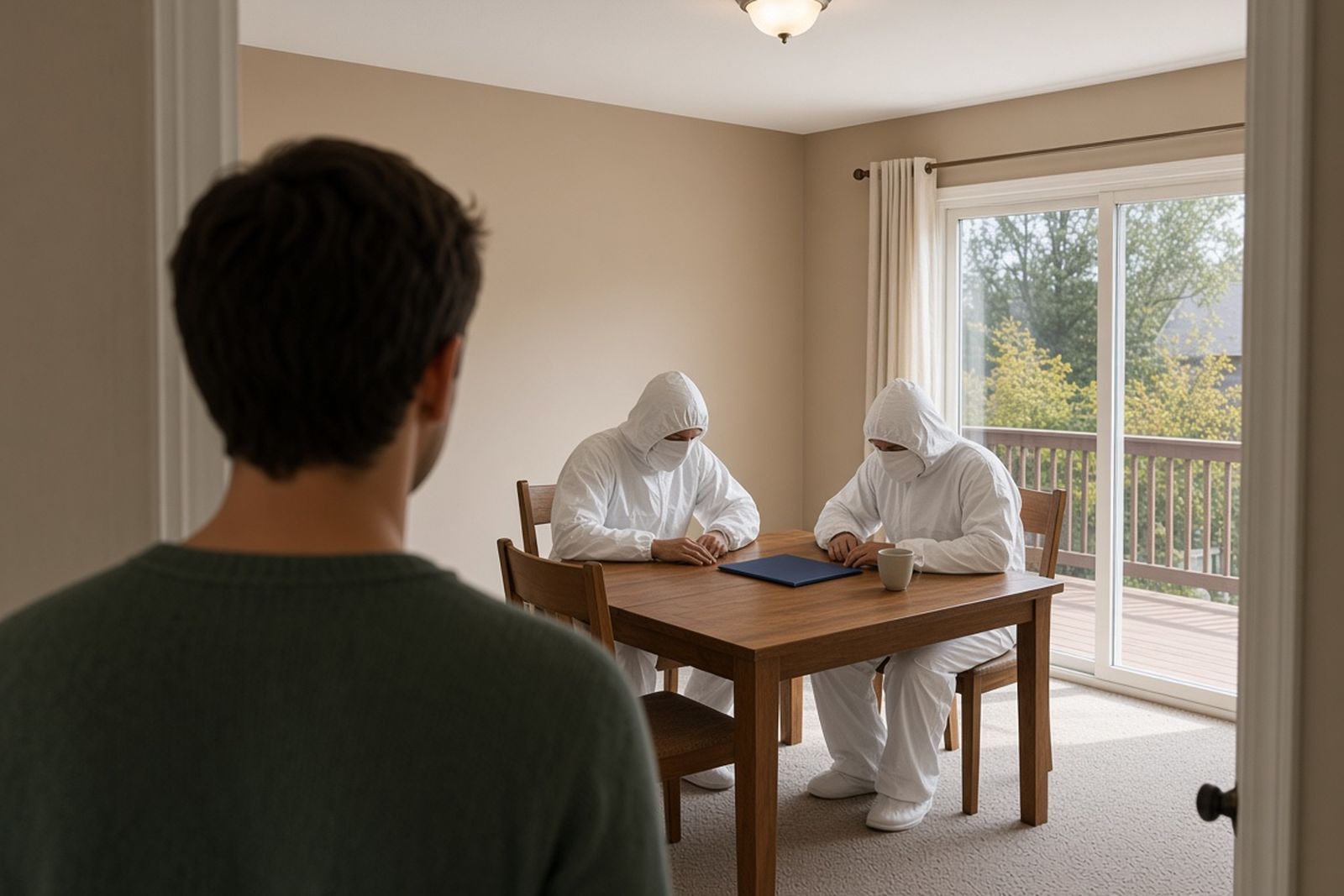
Body fluids can carry bloodborne pathogens, so technicians wear protective equipment for their safety and to prevent anything from spreading through your home. Expect fluid-resistant coveralls, nitrile gloves, eye protection, shoe covers and respirators suited to the work. Employers must provide this gear, and respirator users should be fit tested.
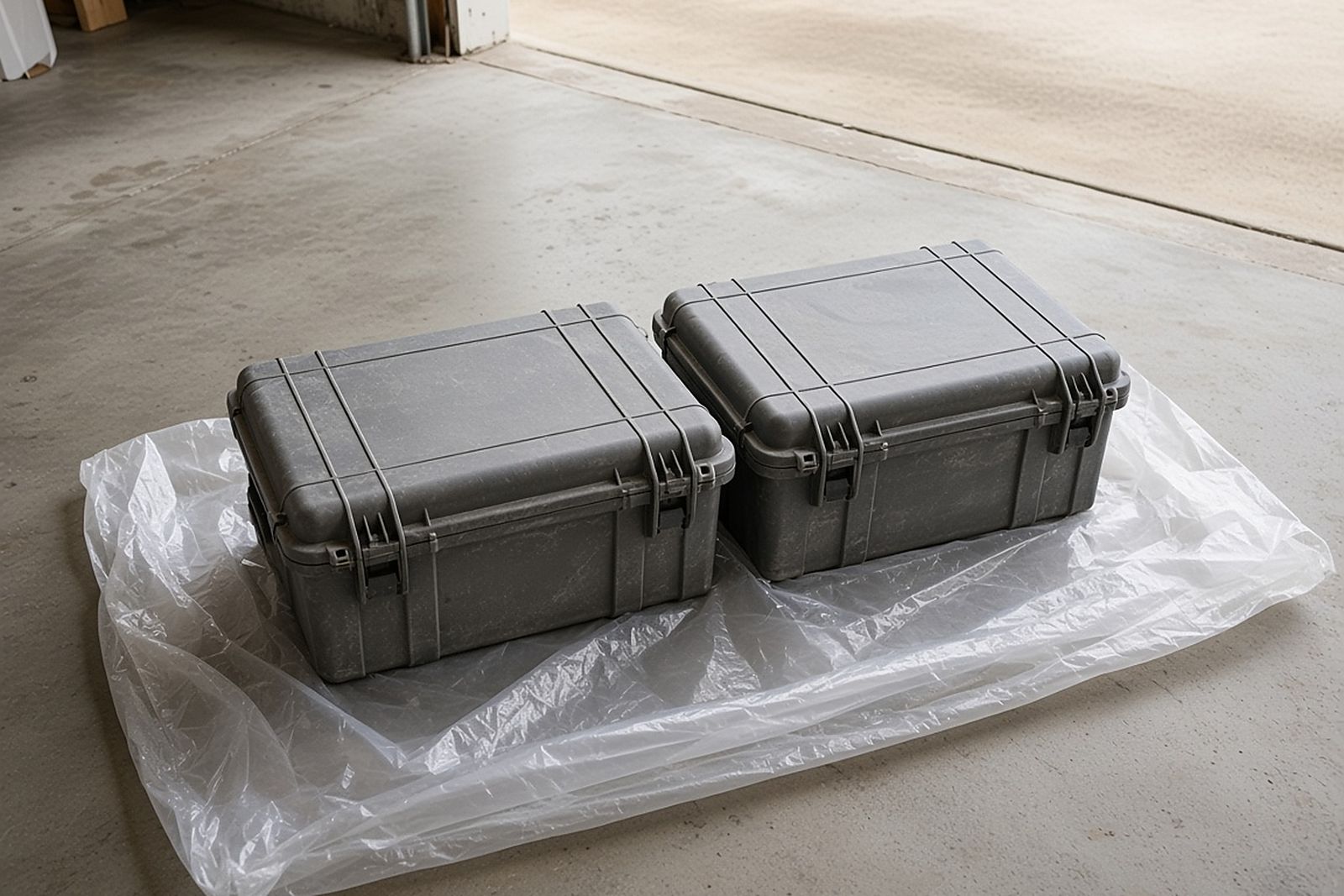
Many families worry about how this looks to neighbors. A thoughtful crew brings gear inside in plain bags or cases and puts it on indoors, often in a hallway or entry area set up for the purpose. If discretion matters to you, ask whether the company uses unmarked vehicles and how it handles arrival and departure.
Protective equipment should be removed in a designated spot and bagged as waste, so nothing from the affected room travels into other parts of the house.
Cleaning products and containment for a home
There are two groups of products, and a complete proposal includes both. Cleaners, such as detergents or enzyme formulas, lift and break down organic material. Disinfectants then kill remaining microorganisms on the cleaned surface.
Disinfectants should be EPA-registered and labeled for bloodborne pathogens. Ask for the product name so you or your helper can read the label. The label lists the surfaces the product is approved for and the contact time, which is how long the surface must stay wet. It may also mention whether the product is safe for finished wood, natural stone or painted walls, which matters in family homes.
If a proposal uses only broad phrases like hospital-grade or professional-strength without naming the product, it is fair to ask for specifics.
Containment supplies belong in this section too. Plastic sheeting across the doorway, floor protection along the path to the exit and covers for nearby vents are simple materials, but they keep the rest of your home untouched while the crew works. If they are missing from the plan, ask how the crew will protect other rooms.
Equipment that protects keepsakes
This is often the part families care about most. Before cleaning starts, a careful crew will ask which items matter to you and will look for personal belongings as they work. They should bring clean bins, sealable bags and labels so saved items are kept separate from waste.
Gentle tools are important. Soft brushes, lint-free cloths and mild cleaners suitable for electronics, eyeglasses, jewelry or photographs let the crew clean items without damaging them. Some providers can refer delicate items, such as heirloom textiles or old photographs, to a specialist restorer.
Ask how the crew will record what is saved, cleaned or cannot be kept, and whether you will receive an inventory. If an item cannot be saved, they should ask before discarding it and can photograph it for you if you wish.
- Clean bins and sealable bags for saved items
- Labels and a written inventory
- Soft brushes and lint-free cloths for delicate belongings
- A separate, sealed container for items you want to review later
Removal tools, air filtration and odor equipment
Porous materials such as carpet, pad, mattresses and upholstered furniture often cannot be fully decontaminated. Removing them calls for carpet cutters, utility knives, and sometimes an oscillating tool if a section of baseboard or drywall is affected. Plastic wrap and heavy bags let the crew seal large items inside the room before carrying them out.
Precision is a sign of care. The crew should remove what is affected, not everything nearby. Ask how they will decide where to stop, and whether they will check beneath carpet or behind baseboards before deciding.
Inspection lights and cameras help here. Angled light reveals spots that overhead lighting hides, and photos document what was found and removed for you, your insurer or a landlord.
If the room will be repaired later, ask the crew to note exactly what was removed, such as a strip of carpet or a length of baseboard, and to leave the area clean and ready for a contractor. That makes it easier for you, or someone helping you, to arrange the next step whenever you feel able.
HEPA air scrubbers capture fine particles when crews remove flooring or drywall. They are useful in those situations and may not be needed for a small area on tile. Odor equipment, such as ozone or hydroxyl generators, may be proposed when odor has developed, especially if some time passed before your loved one was found.
Ozone requires everyone, including pets and plants, to be out of the home during treatment and can affect some materials. Whatever method is proposed, ask why it is needed, how long it will run and when it is safe to come back. Odor treatment should come after removal and cleaning, never instead of them.
If you have lingering sensitivity to certain smells since the loss, mention that too. Some families prefer fragrance-free products, and a caring provider will try to accommodate that.
Two proposals side by side
Setting two proposals side by side often makes the difference plain, even for someone who has never read one before.
A careful proposal lists protective gear, a named cleaner and a named EPA-registered disinfectant approved for the surfaces in the room, such as tile or fiberglass in a bathroom. It includes sealable bags for soft items like towels and a bath mat, soft cloths for small keepsakes the family wants saved, inspection lights for grout lines and a closing report with photos and an inventory.
A generic proposal lists a single protective equipment line, an unnamed hospital-grade solution, whole-house fogging and an ozone treatment, but says nothing about keepsakes, grout or how results will be documented.
The first speaks to what the family asked for and what the room contains. That is the standard to look for, whatever the length of the list.
What records should the equipment produce?
Equipment is only as useful as the record it leaves behind. At the end, you should receive photos, product names and contact times, a list of what was removed and what was saved, and disposal records for waste. Some providers include ATP swab readings, which measure leftover organic residue and support the visual inspection.
Ask for the report in a form you can share selectively. A landlord or insurer may need the photos and waste records, but not the inventory of personal items returned to the family. A provider that understands this will offer to split the documents so your privacy is respected.
Waste from the room is packaged and transported as regulated waste. Requirements differ across the country.
Support as you make these decisions
Many people bereaved by suicide do not reach out for help, even when they need it. If you are hesitating, please know that support is meant for exactly this moment.
If you or anyone close to you is struggling or having thoughts of suicide, call or text 988 to reach the 988 Suicide and Crisis Lifeline at any time. Suicide loss survivor groups, grief counselors and faith communities can walk with you through the weeks ahead.
There is no right amount of involvement in the cleanup. Some family members want to know every detail. Others never want to hear about it. Both are ways of coping, and both deserve respect from the people helping you.