Short answer
Suicide cleanup was long handled privately by families, often in silence because of stigma. Workplace safety rules, better disinfectants and specialist crews made the work safer, while the growth of suicide loss support, safe messaging practices and the 988 Lifeline changed how providers speak with families. Today, good practice combines technical care with discretion, gentle communication and respect for keepsakes.
How families coped with cleanup in the past
For generations, suicide was surrounded by silence. Families often felt they had to keep the cause of death private, sometimes even from close relatives. That secrecy shaped cleanup, too. Many families cleaned the room themselves rather than let anyone else see it, and they did so while in shock and grief.
Those who did ask for help usually turned to people they trusted: a neighbor, a church member, a relative who worked in maintenance. The help was offered out of love, but it rarely included protective equipment, an understanding of how fluids reach beneath surfaces or a safe way to dispose of damaged materials.
The emotional cost could be heavy. Survivors have described how cleaning the room where their loved one died became a lasting, painful memory, layered on top of the loss itself. Nobody should have to carry that, and changing attitudes eventually made that clearer.
Insurance was another barrier. Some families did not realize that a homeowners or renters policy might respond to a death in the home, and others were reluctant to file a claim because it meant explaining what happened. Paying out of pocket, or doing the work themselves, could feel like the only private option.
What made professional cleanup more common?
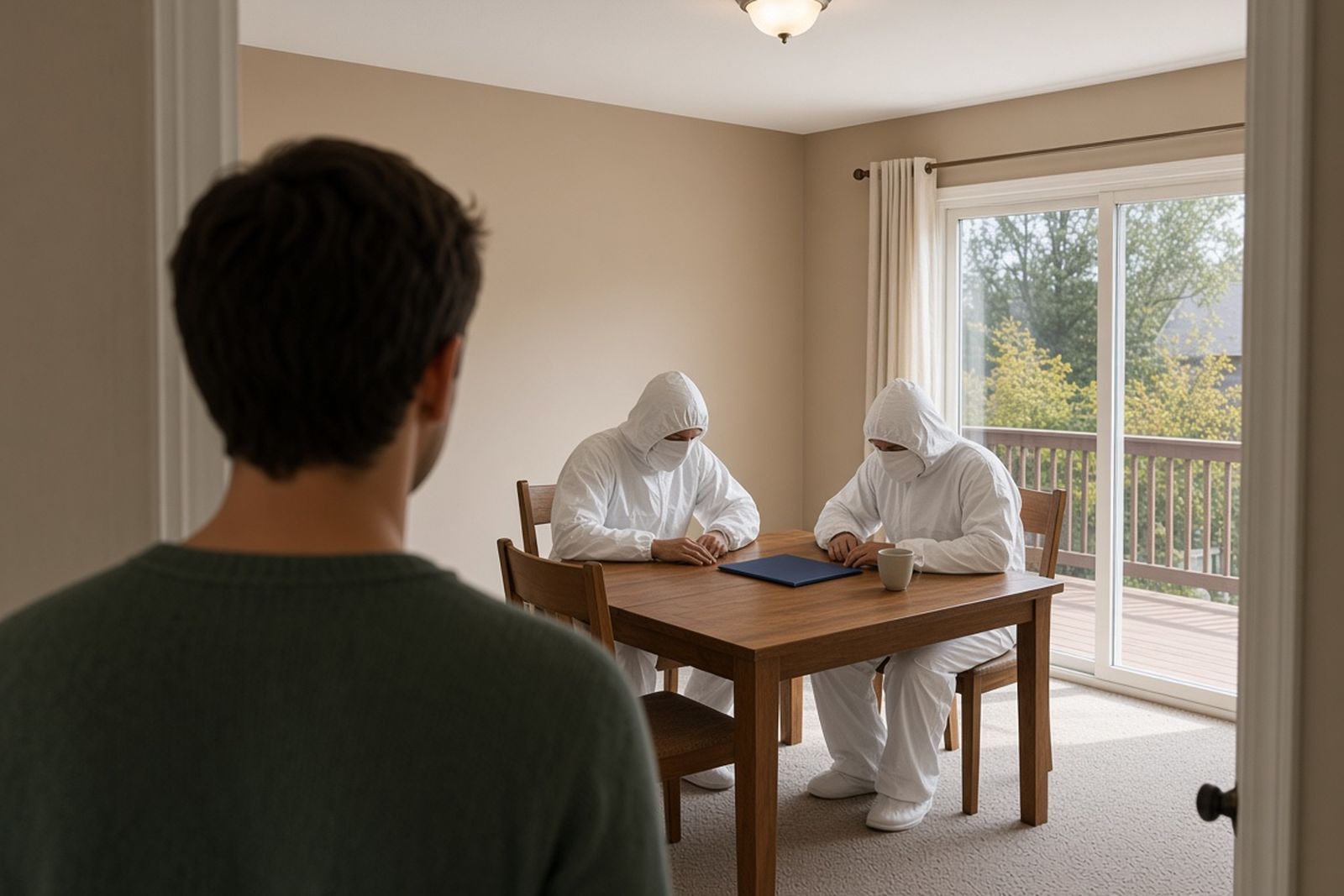
Several forces came together. Awareness of bloodborne diseases led workplaces to treat blood as a hazard requiring training and protective equipment. Federal workplace safety rules on bloodborne pathogens set expectations for employers whose workers face exposure, including training, vaccination and regulated waste handling.
Specialized cleanup companies emerged to meet those rules for homes and businesses. They brought containment methods, disinfectants chosen for their label claims, tools for removing affected flooring and documentation that families could use for insurance.
The need was significant because most of these losses happen at home. The CDC's violent death surveillance for 2021 found that 71.3% of recorded suicides occurred in a house or apartment. That reality meant that families across the country were facing cleanup of spaces they lived in every day.
Early specialist providers were few and far between, and many were extensions of restoration, janitorial or funeral businesses. As demand grew, more companies focused specifically on trauma and death-related cleanup. That specialization brought deeper experience with the emotional side of the work as well as the technical side.
Changing attitudes about suicide
Over time, public conversations about suicide and mental health became more open. Language shifted as well. Many people now say a person died by suicide rather than using older phrases that implied a crime or a moral failing. This change reflects a broader understanding that suicide is connected to pain, illness and circumstance, not blame.
Safe messaging guidelines, developed by suicide prevention experts, encouraged media and organizations to avoid describing methods, to avoid sensational language and to include information about help. Thoughtful cleanup companies adopted similar principles. They stopped using graphic imagery in marketing, trained staff not to discuss how a death occurred and began to mention support resources when appropriate.
Families benefit from these changes every time a provider speaks gently, asks only practical questions and treats the loss with the dignity it deserves.
Workplaces, schools and faith communities also began talking more openly about suicide loss. When a coworker or congregation member dies by suicide, many organizations now offer grief support and practical help to the family, sometimes including a referral to a cleanup provider. That shared responsibility has made it less likely that a family faces the cleanup alone.
Postvention, and where cleanup fits
Postvention refers to the support offered to people after a suicide, including family, friends, coworkers and communities. It grew out of the recognition that suicide loss survivors face intense grief and can be at higher risk themselves. Support groups, grief counseling, outreach teams and school programs are all part of postvention.
Cleanup is a practical piece of that picture. When a family does not have to clean the room themselves, they are spared a traumatic task and can focus on grieving and caring for each other. Some communities have loss survivor outreach teams that visit families soon after a death and may help them find a cleanup provider along with other resources.
Providers that understand postvention see their role not just as removing contamination but as protecting a vulnerable family from additional harm.
How did the 988 Lifeline change the conversation?
In July 2022, the United States began using 988 as the number for the Suicide and Crisis Lifeline. The short number made it easier for people in crisis, and those who care about them, to reach help. Demand has been substantial: a 2025 KFF analysis found that the Lifeline handled 16.5 million contacts, including 11.1 million calls, 2.9 million texts and 2.4 million chats, from July 2022 through May 2025.
For cleanup providers, 988 offered a simple, reliable resource to share with families. Grief after suicide can sometimes bring thoughts of self-harm, and providers who gently mention that anyone can call or text 988 are helping to connect survivors with support.
Many respectful companies now include the number in their information packets or mention it in closing conversations, without pressure and without assuming anything about the family.
How belongings and notes came to be handled
In the past, when families or untrained helpers cleaned a room, items were often thrown out in a rush. Photographs, letters, clothing and other keepsakes could be lost forever. Some families later regretted decisions they made in the first hours.
Professional practice has moved toward protecting belongings. A good crew now asks what matters to the family before work starts, sets aside personal items for review, cleans what can be safely cleaned and offers to photograph anything that cannot be returned. Families receive an inventory so they know what was saved.
Crews are also trained to hand over any note or personal writing unread to the family or to authorities as appropriate. That practice reflects respect for the person who died and for the family's right to decide what to do with such a personal item.
Documentation has also improved. Families now commonly receive photos of the finished space, an inventory of saved and removed items and disposal records. For survivors who may not be able to look at the room for weeks or months, those records offer quiet reassurance that the work was done with care.
Then and now
The shift is easiest to see side by side. In the older pattern, a grieving family often told no one the cause of death and cleaned the room alone, throwing away bedding, rugs and sometimes letters they later wished they had kept.
In the newer pattern, a loss survivor outreach volunteer may visit and help the family contact a cleanup provider. The coordinator asks only practical questions and may suggest that family members stay elsewhere while the work is done. The crew sets aside letters, clothing and photo albums, hands them to the family in a labeled box with an inventory and mentions a local survivors group and the 988 Lifeline before leaving.
That change is one many survivors and providers have witnessed.
What still needs to improve?
Progress has been real but uneven. There is still no single national license for suicide cleanup, and quality varies widely between companies. Some providers still use aggressive sales tactics or insensitive language. Families in rural areas may have fewer choices.
Awareness remains a challenge as well. Many families do not know that professional cleanup exists or that some insurance policies may help with the cost. Victim services and survivor outreach programs can close that gap, but they are not available everywhere.
Anyone choosing a provider today can use this history as a guide: expect technical competence, discretion, gentle communication and respect for keepsakes, and feel free to keep looking if a company does not offer them.
Cost remains a worry for many households. Prices vary with the size of the affected area and the materials involved, and insurance coverage depends on individual policies. Families benefit when providers explain pricing clearly and help with documentation, instead of leaving them to discover gaps after the work is done.
Where survivors can turn now
Support for suicide loss survivors is more available than ever. Survivor support groups, grief counselors, faith communities and online communities can all help. If you or someone you love is struggling or having thoughts of suicide, call or text 988 to reach the 988 Suicide and Crisis Lifeline at any hour. Asking for help is a meaningful act of care.