Short answer
When a suicide happens in a unit you manage, your role is to protect the property, the surviving household and neighboring tenants at once. Confirm who can authorize work, keep the family's privacy, limit the scope to documented conditions, notify your insurer, communicate calmly with other residents and set a written condition for when the unit can be occupied again.
First steps when you learn of a suicide in a unit
If you manage residential property long enough, you may face this. Most suicides happen at home: federal surveillance data show that 71.5% of the suicides recorded by the CDC's National Violent Death Reporting System in 2022 took place in a house or apartment. Knowing that it is not rare will not make it easier, but it can help you prepare a calm, repeatable response.
Start by slowing down. The first call often comes from police, a neighbor or a family member, and it can be tempting to rush to the unit. Unless there is an urgent building issue such as an active leak, wait until law enforcement and the medical examiner have finished and released the space.
Write down who contacted you, when the unit was released and the name of any officer or investigator you spoke with. Secure the door and any keys, and make sure maintenance staff know not to enter. A vendor who walks in unprepared can be hurt emotionally and physically, and can spread contamination into hallways.
Then think about who in your organization should own this event. One named person who handles the family, the insurer and the cleanup company prevents mixed messages and repeated painful conversations.
Who has the authority to approve cleanup in a rental?
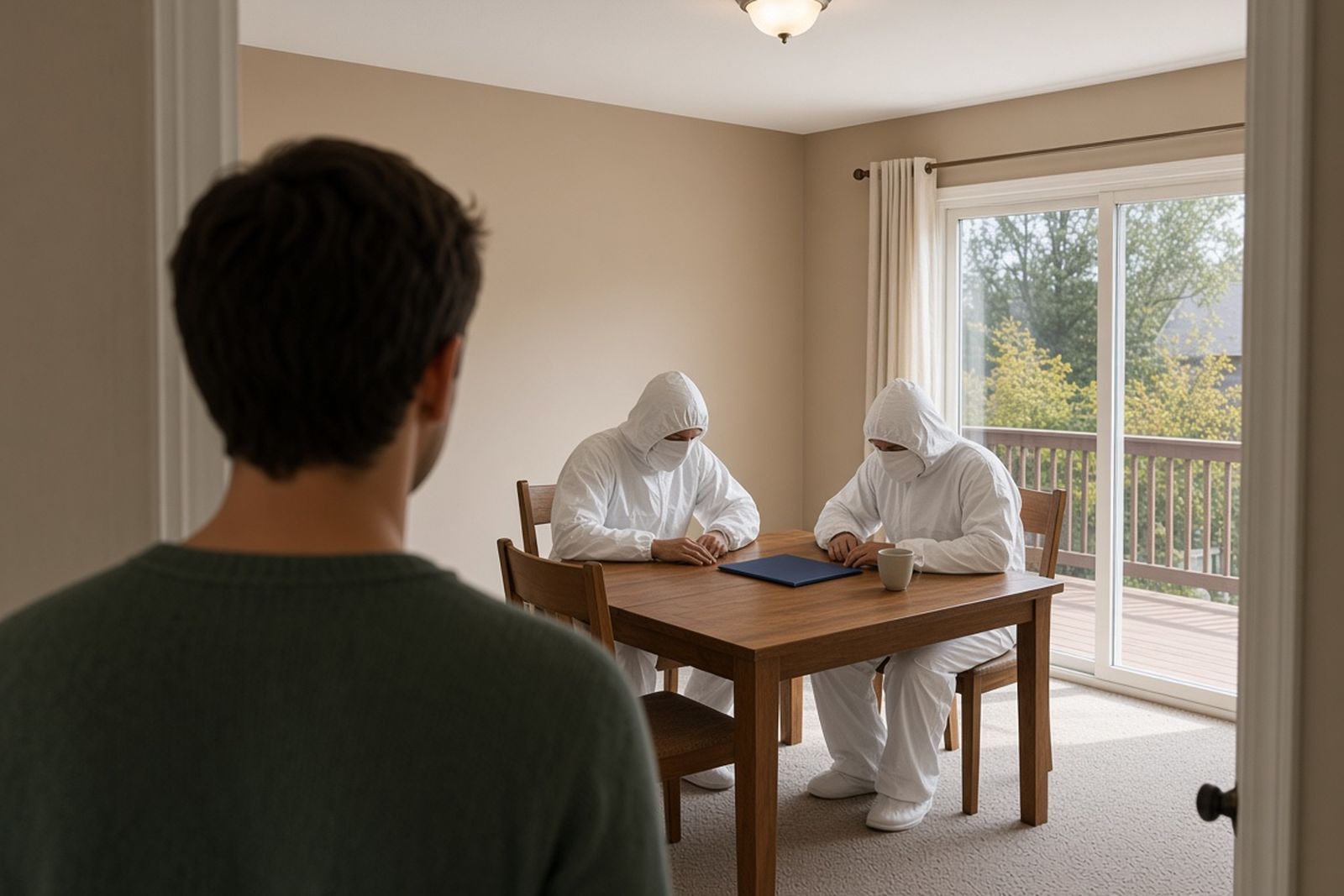
This is often less clear than it seems. If the person who died was the only leaseholder, the family may not yet have legal authority over the unit or its contents. If there are surviving roommates or family members on the lease, they may share decisions about personal belongings, while you control the building itself.
In general, you can usually authorize work on the structure and fixtures you own, such as flooring, drywall and cabinetry. Decisions about personal property usually belong to the estate, the next of kin or a court-appointed representative. Check with your attorney before discarding anything that belonged to the resident.
Put the split in writing. The work order should say who approves structural removal, who approves handling of belongings, who can approve changes to the scope and who signs off at the end.
Talking with the family without adding to their pain
The family may be in shock, and your message may be one of dozens they receive in the first week. Keep contact brief, warm and practical. Offer condolences in plain words, explain that you will arrange professional cleanup of the unit, and ask how they would like to handle their loved one's belongings.
Avoid discussing how the person died, and do not ask for details. If the family wants to remove personal items themselves, suggest waiting until the affected area has been cleaned, and offer to have the cleanup crew set aside and pack items from the affected room.
Be careful with lease and rent language in these early conversations. Questions about the lease term, deposit or final rent will need answers eventually, but they can often wait a few days. If you must raise them, do so in writing so the family can read it when they are ready.
It can also help to share that support exists. Anyone struggling after a suicide loss can call or text 988 to reach the 988 Suicide and Crisis Lifeline.
What to tell other tenants and neighbors
Other residents may have seen emergency vehicles or noticed activity. They deserve reassurance, but not details. A short notice can say that there was a death in the building, that the family has asked for privacy and that professional crews may be on site for a limited time.
Do not name the resident or the cause of death unless the family has agreed. Rumors spread quickly in shared buildings, and a respectful, consistent message from management helps protect both the family and the other tenants.
Some neighbors may be deeply affected, especially if they knew the person well or found them. Including the 988 Lifeline in your notice gives anyone who is struggling a place to turn without singling anyone out.
Ask the cleanup company to use discreet vehicles and quiet staging if possible, and to schedule equipment movement during lower-traffic hours. If the work touches shared hallways or elevators, post neutral signage about maintenance rather than anything that draws attention to the unit.
Keeping the scope tied to what the unit needs
A good provider walks the unit, photographs affected areas and writes a scope tied to what they actually found. Ask that each line item connect to a documented condition, such as a stained subfloor, a contaminated baseboard or an HVAC return near the affected area.
Ask how they will check whether fluids migrated beneath flooring or into wall cavities, and what evidence would lead them to open a wall. When a cavity is opened, the scope should say whether it was dry and clean before it is closed again, so your restoration contractor knows what it is building over.
Change orders are common in this work because hidden spread cannot always be seen at first. Agree in advance that any expansion needs your written approval and photos showing why. That protects you from surprises and gives the insurer a clear record.
Also ask the provider to note any building systems near the affected room. A shared return vent, a common wall with the next unit or a plumbing chase can matter in a multifamily building. If the neighboring unit needs to be checked, arrange access through that tenant respectfully, and explain only that maintenance staff need to confirm nothing affected their space.
- Areas affected, with photos available on request
- Materials to be removed versus cleaned and disinfected
- How belongings will be sorted, packed and stored
- Waste handling and disposal documentation
- Exclusions, such as rebuild or cosmetic repairs
- Who approves change orders and final sign-off
When should I notify my insurer?
Notify your property insurer early, even if you are unsure whether the policy will respond. Many policies have notice requirements, and late notice can complicate a claim. Share the cleanup company's written scope and photographs, and ask your adjuster whether they need to inspect before work begins.
Coverage for this kind of event varies widely by policy, and no provider can promise approval. Keep the family's possible claims separate from yours. Their renter's policy, if they had one, may address personal property, while your policy addresses the building.
Keep a single file with the release notes, scope, change orders, waste documentation, invoices and final report. That file answers most questions from adjusters, owners and auditors later.
If the owner of the building is someone other than you, such as an investor or an association, send them a short factual summary rather than photographs. They need to know the unit is offline, what the scope covers and when you expect it back. They rarely need the details that the family has asked you to keep private.
When the unit is ready to rent again
Set the re-occupancy condition before work starts, not after. A reasonable condition might be a completed scope, a final report with photos, documented disposal and a walkthrough showing no visible residue or lingering odor. Rebuild and cosmetic repair then follow as a separate project.
Some states have rules about what landlords must or must not disclose to prospective tenants about a death in a unit. Rules vary by state and county; verify with the local authority or your attorney rather than guessing.
When the unit does return to the market, avoid staging it in ways that feel like erasure to the family if they are still involved, such as posting listing photos before their belongings are collected. A short call letting them know the timeline is a small courtesy that many families remember.
Finally, look after your own team. Staff who responded, or who knew the resident, may carry more than they show. Offer time off, access to your employee assistance program if you have one, and a reminder that 988 is available to them, too.